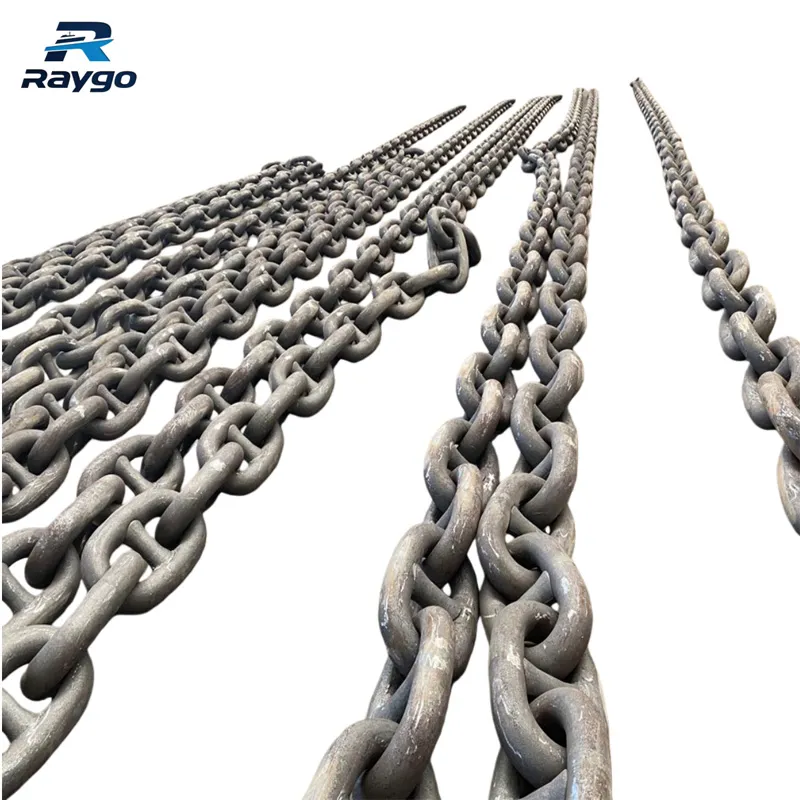
A marine anchor chain is a key part of a ship anchoring system. It is used to connect the anchor and the vessel, transferring the holding force from the anchor to the ship.
During anchoring, the weight of the chain helps absorb external forces caused by wind, waves, and currents. The part of the chain lying on the seabed helps maintain a more horizontal pulling force, which improves the anchor’s holding stability and supports safer vessel anchoring.
Marine anchor chains are commonly used for commercial vessels, fishing vessels, tugboats, workboats, bulk carriers, container ships, tankers, passenger vessels, and ship repair projects.
Technical Specifications:
| Parameter | Specification |
| Product Name | Marine Anchor Chain |
| Chain Type | Stud Link / Studless Link |
| Grade | Grade 2 / Grade 3 / Grade 4 |
| Material | Marine-grade Steel / Alloy Steel / Stainless Steel |
| Diameter Range | Customized According to Project Requirements |
| Surface Treatment | Painted / Galvanized / Self-color |
| Accessories | Kenter Shackle, Swivel, End Shackle, Joining Shackle, Enlarged Link, End Link |
| Application | Ship Anchoring System / Vessel Anchoring / Ship Repair |
| Certificate | CCS, ABS, BV, LR, DNV, NK, KR, RINA, RS etc. upon Request |
Note: Chain diameter, grade, surface treatment, length, accessories, and certificate requirements can be customized according to vessel type and project specifications.
Key Features:
-
High-Strength Alloy Steel: We use alloy steel with excellent resistance to corrosion, wear, and fatigue.
-
Certified Performance: We supply chains with full certification from major class societies, including ABS, BV, CCS, DNV, LR, and NK.
-
Multiple Strength Grades: You can select from standard, high-strength, or ultra-high-strength grades to match your vessel’s needs.
-
Wide Size Range: We manufacture anchor chains in diameters from 12.5mm up to 178mm.
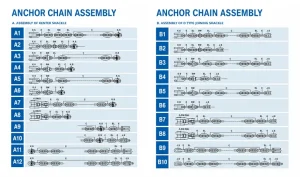
Anchor Chain Structure:
A complete marine anchoring system requires multiple specialized components working together.
- Main Chain Divisions: The system consists of the anchor end link, intermediate chain sections, and the end link.
- Basic Links: Intermediate sections consist of many common links connected sequentially.
-
Transition Components: Enlarged links and end links help transition between different chain sizes or accessory connection points.
-
Connection Accessories: Shipyards assemble these lengths using joining shackles, D type joining shackles, or Kenter shackles.
-
Rotational Control: Swivels and anchor swivel shackles prevent the chain from twisting under tension during deployment or retrieval.
-
Terminal Connections: End shackles and forelock shackles secure the terminal points of the chain layout.
Available Options:
|
Mechanical Mechanical Properties – Anchor Chain
|
||||||
| Grade | Yield Strength (N/mm², min) | Tensile Strength (N/mm², min) |
Elongation (%, min) |
Reduction of Area (%, min) |
Charpy V-notch | |
| Test Temperature (°C) | Impact (I) |
|||||
| 2 | ≥295 | 490~690 | ≥22 | — | 0 | ≥27 |
| 3 | ≥410 | ≥690 | ≥17 | ≥40 | 0 | ≥60 |
| ≥50(weld) | ||||||
| 4 | ≥490 | ≥770 | ≥12 | ≥50 | -20 | ≥45 ≥33(weld) |
Note: Each anchor chain can be customized by chain diameter, chain length, surface treatment, fittings, and certificate requirements.
Production Process:
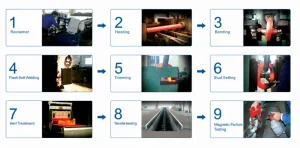
Raygo Marine works with reliable production systems to ensure stable chain quality and consistent anchoring performance.
- Material Preparation: Steel material is selected and prepared according to the required chain diameter, grade, and production standard.
- Heating: The material is heated before forming to ensure proper bending performance and dimensional stability.
- Bending: The heated steel is bent into the required chain link shape.
- Flash Butt Welding: The chain link is welded by flash butt welding to ensure a strong and reliable welded joint.
- Trimming: Excess welding material and burrs are removed to improve link surface quality and dimensional accuracy.
- Stud Setting: For stud link anchor chains, the stud is set into the chain link to improve link stability and reduce deformation during use.
- Heat Treatment: Heat treatment improves the chain’s mechanical properties, including strength, toughness, and load-bearing performance.
- Proof Load / Tensile Testing: The chain is tested to verify its load-bearing performance and ensure compliance with project or standard requirements.
- Magnetic Particle Testing: Magnetic particle testing is used to inspect welding quality and detect surface defects before delivery.
Quality Control & Testing:
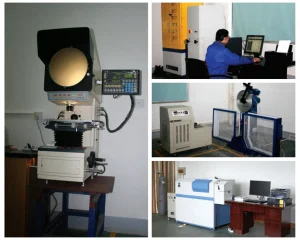
Quality control is essential for marine anchor chains because they directly affect vessel anchoring safety and reliability.
Raygo Marine supports strict inspection and testing procedures during production and before shipment.
Quality control items include:
- Raw material inspection
- Dimensional inspection
- Welding quality inspection
- Heat treatment control
- Proof load testing
- Tensile testing
- Breaking load testing
- Magnetic particle testing
- Final inspection before shipment
Testing reports and certificates can be supplied according to customer requirements and classification society rules.
Applications:
Marine anchor chains serve multiple vital maritime sectors.
-
Commercial Shipping: Cargo vessels use standard stud link anchor chains for routine port anchoring and emergency stops.
-
Offshore Mooring: Floating offshore structures rely on specialized mooring chains. These upgraded chains feature high bearing capacity, special structures, and easy installation. Because they operate continuously in harsh marine environments, they demand extremely high corrosion resistance, toughness, and tensile strength. Advanced fatigue testing demonstrates that these mooring chains reach an average lifespan exceeding twice the standard design curve.
-
Navigational Buoys: Complete buoy chain assemblies consist of bridle chains, short cables, half cables, and whole cables.
-
Mining Equipment: We also supply high tensile round link chains for mining use that comply with GB/T12718-91 Level B and Level C requirements.
Installation & Maintenance:
Proper installation and regular maintenance help extend the service life of marine anchor chains and improve anchoring safety.
Recommended practices:
-
Use suitable shackles and fittings to connect the anchor and chain.
-
Make sure the chain size matches the vessel anchoring system.
-
Inspect chain links regularly for wear, deformation, and corrosion.
-
Check shackles, swivels, and connecting links during maintenance.
-
Replace damaged or heavily worn chain sections in time.
-
Keep inspection records according to vessel operation and class requirements.
Custom Options Available:
We support non standard product customization to meet distinct client demands.
-
Shackle Varieties: We supply a wide range of screw pin anchor shackles including G-209, G-210, G-2130, and G-2150 models. Marine shackles available include straight unloading buckles (D1 to D4) and arched unloading buckles (OE1 to OE4) built to GB559-87 standards.
-
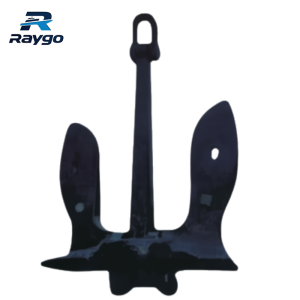
Anchoring Hardware: Complete your order with specific anchors such as Stockless Anchors, Hall Anchors, Spek Type Anchors, or AC-14 H.H.P. Anchors.
-
Deck Accessories: We provide custom cast steel cable stoppers, anchor chain disengaging tools, and wheel leading chains.
FAQ :
Q: What is the difference between Grade 2 and Grade 3 anchor chain?
A: Grade 2 and Grade 3 anchor chains have different strength levels. Grade 3 anchor chain is generally used for applications requiring higher strength. The suitable grade depends on vessel requirements and project specifications.
Q: Can you provide classification society certificates?
A: Yes. Classification certificates can be supplied according to project requirements. Available options may include CCS, ABS, BV, LR, DNV, NK, KR, RINA, RS, and other recognized marine classification societies.