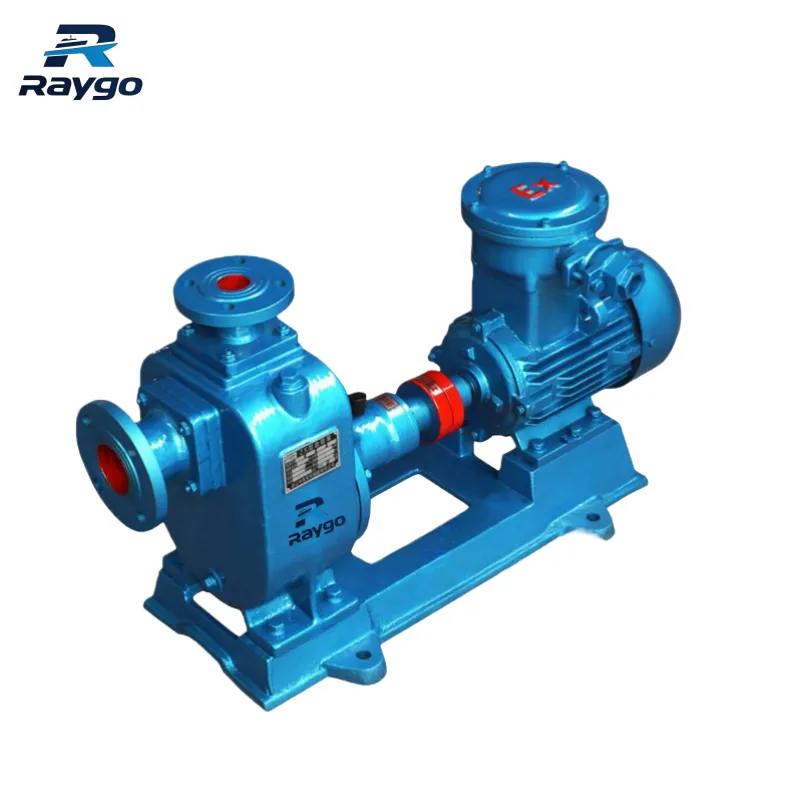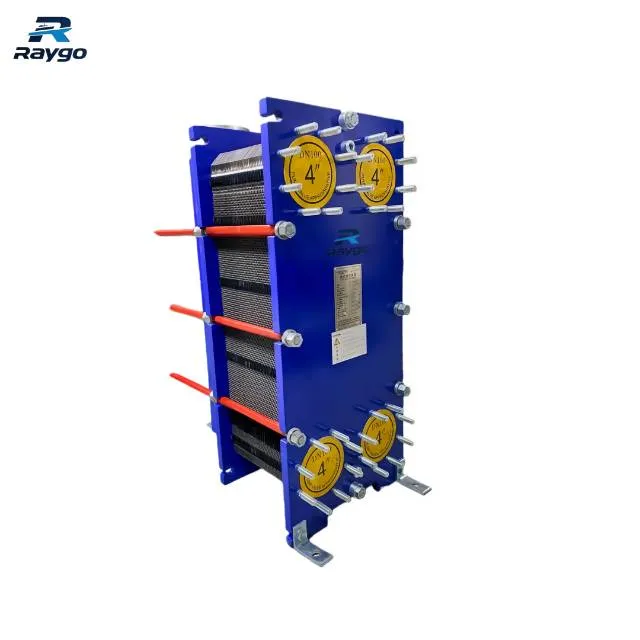
To get an accurate marine equipment replacement quote, send the OEM or manufacturer, equipment type, model and serial number, complete part number, clear nameplate and equipment photos, critical dimensions and connections, operating conditions, vessel or system application, class/certification requirements, quantity, delivery destination, and required date. If some information is missing, mark it “to be confirmed” and send what you have—the supplier can tell you which details are critical before a replacement is selected.
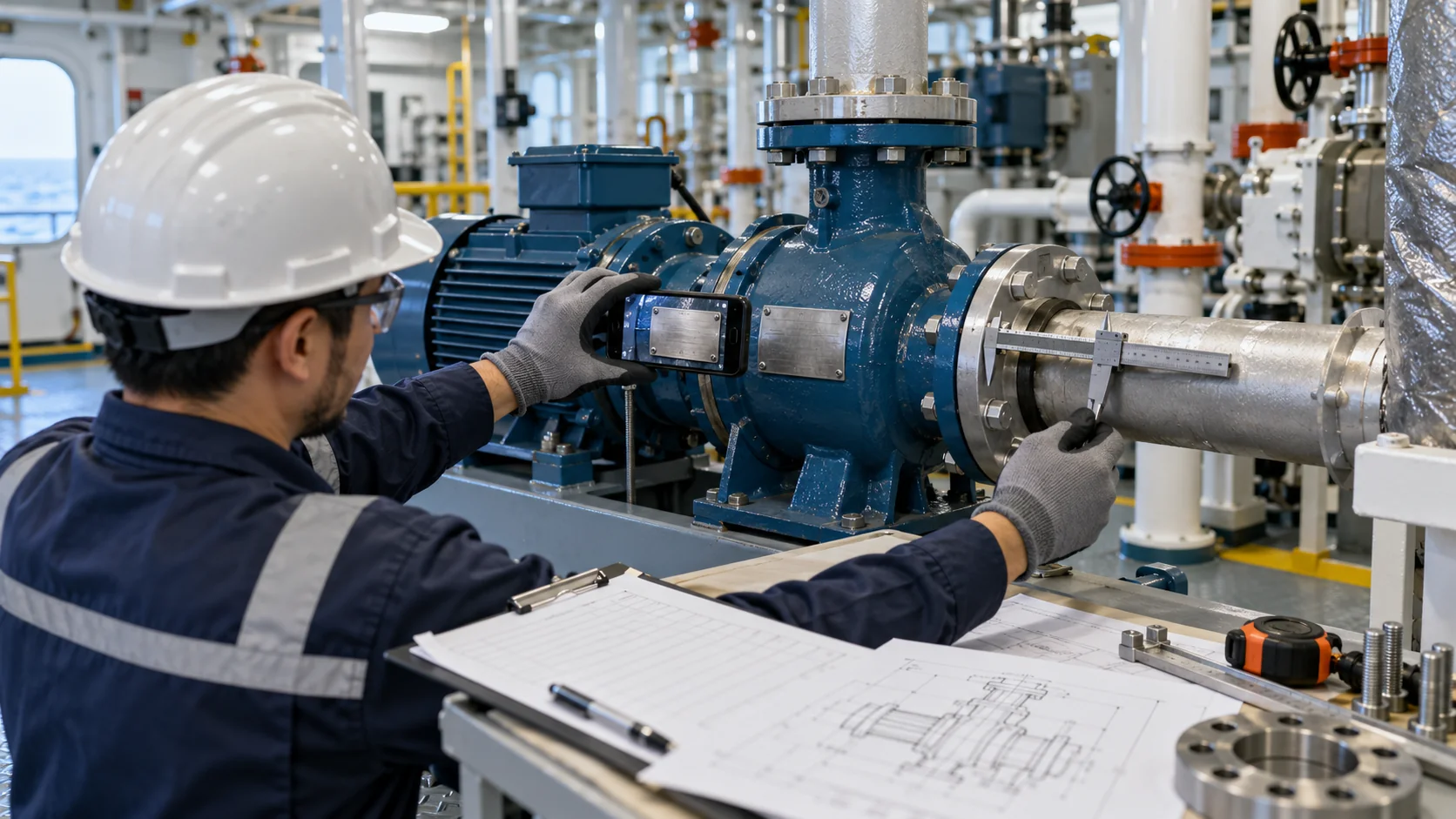
Quick RFQ Checklist
- OEM / manufacturer and equipment name
- Model, serial number, and complete part number (including prefixes and suffixes)
- Clear nameplate photo
- Overall equipment photos plus close-ups of connections, mounting points, and identification marks
- Critical dimensions: overall size, connection/flange size, mounting footprint, and available installation space
- Operating conditions: flow, pressure/head, temperature, medium, electrical supply, duty, or other relevant ratings
- Vessel, system, and equipment application
- Required materials, class society, certificate type, or testing/documentation requirements
- Quantity, vessel/current location or destination port, required date, and preferred shipping arrangement
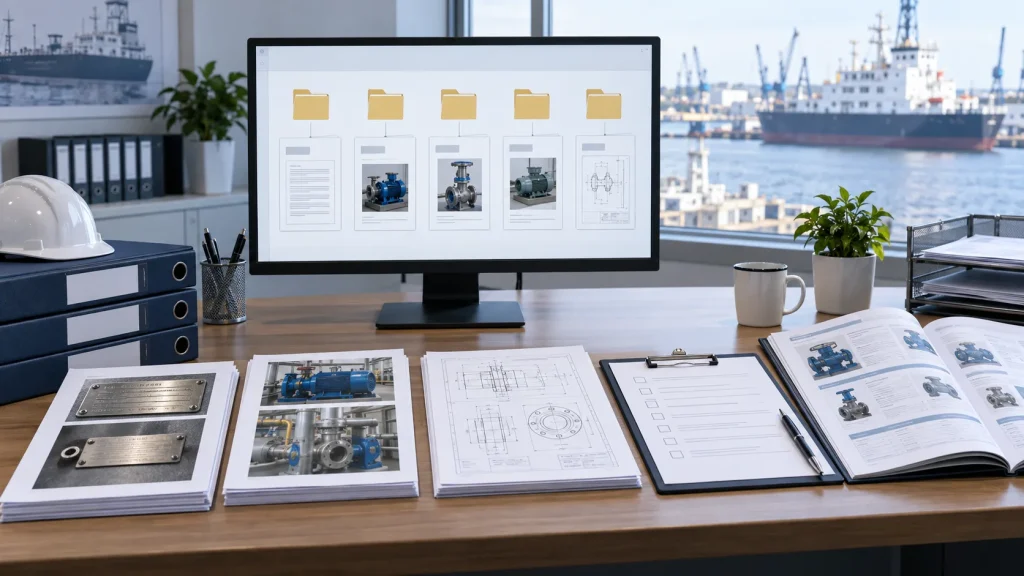
- Available supporting files: drawing, manual, previous purchase record, inspection report, or certificate
Why Is a Part Number Alone Not Always Enough?
A part number is an important starting point, but it is not always a unique technical identifier. The same base number can appear across different generations, materials, pressure ratings, voltage/frequency options, seal or elastomer combinations, regional versions, or product revisions. Older records may also contain an obsolete number, an internal stock number, or a number copied from only one component of a larger assembly. A reliable marine equipment replacement therefore requires cross-checking more than one identifier.
For this reason, a supplier should compare the part number with the model, serial number, nameplate, dimensions, photographs, operating conditions, and installation arrangement before recommending a replacement. The goal is not simply to “find the same number,” but to confirm that the proposed equipment will fit, perform correctly, and meet the required documentation or certification.
What Information Should You Send Before Requesting a Quote?
| Information | What to Send | Why It Matters |
|---|---|---|
| OEM / manufacturer | Name shown on the equipment, nameplate, drawing, manual, or purchase record | Identifies the product family and possible technical records |
| Equipment name/function | Pump, valve, filter, heat exchanger, compressor, motor, actuator, etc. | Defines the equipment type and what it must do |
| Part number | Complete number with every prefix, suffix, dash, and revision mark | Supports cross-reference and revision checks |
| Model & serial number | Full model designation and production/serial number | Helps identify the exact configuration |
| Nameplate | Clear, straight-on photo of the complete plate; send close-ups if needed | Provides ratings such as capacity, pressure, power, speed, voltage, temperature, or materials |
| Photos | Overall views plus connections, mounting points, rotation/orientation, casting marks, and damaged areas | Shows physical design and installation arrangement |
| Dimensions & connections | Overall size, flange/port size, bolt circle, mounting footprint, shaft/coupling size, orientation, clearances | Confirms installation compatibility |
| Operating conditions | For example: flow and head, suction/discharge pressure, design pressure, temperature, medium, viscosity, voltage, frequency, phase, duty | Confirms performance and material suitability |
| Material requirements | Body, trim, seal/elastomer, impeller, tube/plate, or other critical wetted materials | Avoids compatibility problems with seawater, fuel, chemicals, steam, etc. |
| Vessel/system application | Vessel name or type, onboard system, service location, function | Adds context for selection and documentation |
| Class/certification | Required class society, certificate type, material certificates, witnessed testing, flag or owner requirements | Ensures quotation scope matches approval requirements |
| Delivery details | Quantity, current vessel location or destination port, required date, preferred shipping method | Supports stock, lead-time, and logistics planning |
Whenever possible, attach drawings, manuals, previous purchase records, inspection certificates, or earlier quotations. These files are especially valuable when the equipment is old, modified, or poorly marked.
What If You Only Have Photos?
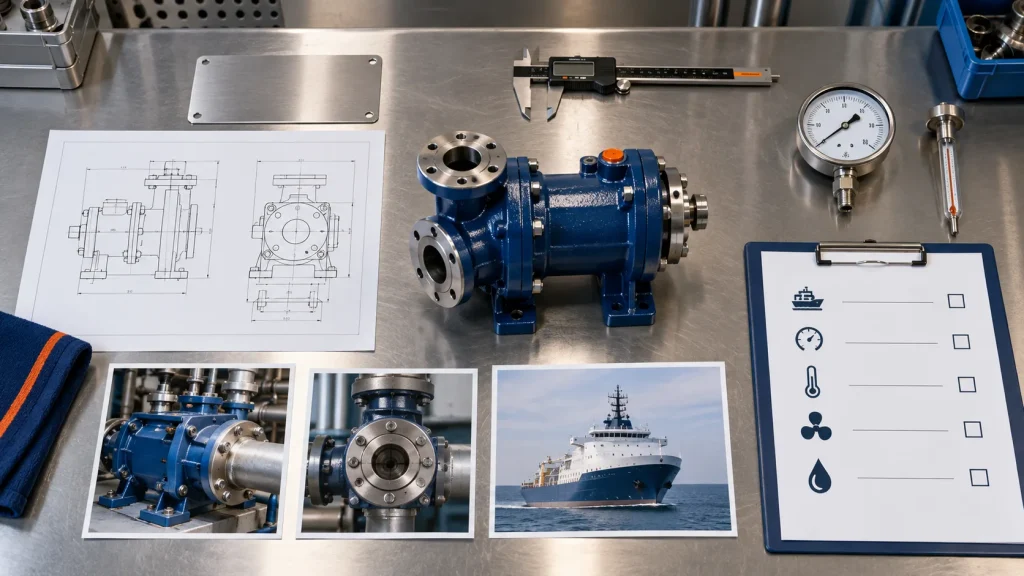
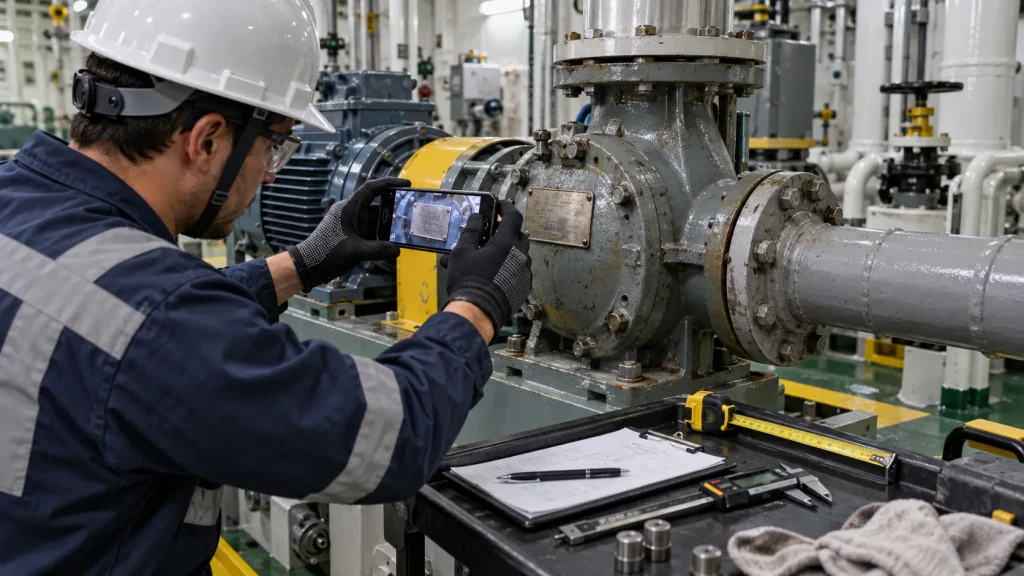
Photos can be enough to start an identification request, especially when the nameplate is missing or the vessel records are incomplete. For a marine equipment replacement, clear overall and close-up images help the supplier compare construction, connections, and installation orientation. The supplier may still need dimensions or operating data before confirming a replacement, but good photographs can narrow the possibilities quickly.
Take and send the following photos:
- One full view showing the complete equipment and surrounding installation
- One straight-on nameplate photo, plus a close-up if small text is difficult to read
- Every stamped, cast, engraved, or labeled number on the equipment body, motor, gearbox, actuator, or control panel
- Inlet/outlet connections, flange faces, bolt patterns, mounting feet, brackets, shaft/coupling, and cable entries where relevant
- A photo with a ruler, caliper, or tape measure visible when size is difficult to judge
- Any damaged, modified, or previously repaired area that may affect replacement selection
Avoid heavy filters, screenshots of compressed images, or oblique angles that distort the nameplate. If possible, keep the original high-resolution files.
What If the Part Number, Model, and Vessel Records Conflict?
Conflicting information should be treated as a technical issue rather than resolved by guessing. This commonly happens when a component was replaced without updating vessel records, a manual covers several variants, a previous supplier used an internal stock number, a complete machine and one of its components have different identifiers, or a prefix/suffix was omitted.
Photograph every number and state where each one was found—for example: pump casing, motor plate, actuator, manual, drawing, or purchasing record. The supplier can then compare the physical equipment, documentation, installation, and operating data to determine which reference should control the replacement selection.
What If the Nameplate Is Missing or Unreadable?
A missing nameplate does not always prevent identification. Model numbers or casting marks may appear on the equipment body, motor, gearbox, actuator, or control panel. Manuals, drawings, purchase records, class documents, and inspection reports can provide additional evidence.
Take photographs from several angles and try side lighting to reveal worn characters. If the original identity remains uncertain, evaluate the dimensions, connections, performance, materials, electrical ratings, and application rather than relying on appearance alone.
What If the Original Manufacturer No Longer Exists?
Depending on the equipment and available records, the marine equipment replacement path may include old stock, a superseded part number, a compatible alternative, reproduction from a drawing or sample, or an upgrade of the complete assembly. When no direct replacement exists, the choice should be based on function and interface—not on visual similarity.
Before approval, verify critical materials, capacity/performance, dimensions, connections, electrical requirements, and certification/documentation. For obsolete equipment, historical manuals, drawings, photos, inspection records, and previous purchase documents are especially useful.
What If Exact Dimensions Are Not Available?
Equipment that remains in service may need to be measured in place. Record the dimensions that control installation first. For pumps, valves, and similar equipment, these often include connection sizes, flange standard and rating, face-to-face or centerline dimensions, mounting points, shaft/coupling details, pipe orientation, and available installation space.
An annotated sketch is often more useful than a list of numbers. Mark each measurement directly on the sketch and match it to the related photo. If a dimension is uncertain, label it “approx.” or “to be confirmed” instead of guessing.
What Operating Conditions Should You Include?
The exact data depends on the equipment type. For any marine equipment replacement, include the parameters that determine capacity, pressure/temperature capability, material compatibility, and electrical compatibility.
| Equipment | Useful Operating Data |
|---|---|
| Pump | Flow rate, total head or suction/discharge pressure, liquid, temperature, viscosity/density if relevant, speed, motor voltage/frequency/phase |
| Valve | Size, end connection, pressure class/rating, design/operating pressure, temperature, medium, material, actuation type, fail position if applicable |
| Electric motor | Power, voltage, frequency, phase, speed, frame/mounting, IP/enclosure, insulation class, duty, hazardous-area requirement if applicable |
| Heat exchanger | Duty/capacity, hot/cold media, inlet/outlet temperatures, flow rates, design pressure/temperature, materials, allowable pressure drop |
| Filter/strainer | Medium, flow rate, working/design pressure, temperature, filtration rating/mesh, connection size, body/element material |
What If Class Certification Is Required?
State the required class society and certificate type in the initial RFQ. Depending on the project, the scope may also include material certificates, test reports, witnessed testing, type approval, flag documentation, or owner-specific requirements. See the IACS explanation of classification societies for the wider role of class and statutory certification.
Do not assume that “marine type” automatically includes the approval you need. Ask the quotation to state exactly which certificates and technical documents are included, which are optional, and which require additional lead time or cost.
What If the Replacement Is Urgent?
An urgent RFQ should make the logistics constraints as clear as the technical requirements. Include:
- Vessel’s current location and, if relevant, next port of call
- Quantity and the latest acceptable delivery date/time
- Preferred shipping arrangement or local agent/forwarder details if already known
- Whether an equivalent product is acceptable
- Whether repair, temporary solution, exchange unit, or partial shipment is acceptable
- Which technical requirements are fixed and which can be adjusted to meet the deadline
Technical information is still essential during an emergency. Sending complete photos, dimensions, nameplate details, and operating conditions at the start can reduce back-and-forth and lower the risk of dispatching the wrong equipment.
How Should You Structure an RFQ for Faster Technical Evaluation?
Use a subject line that makes the equipment and application immediately clear:
RFQ – Marine Equipment Replacement – [Equipment Name] – [Vessel / Application]
If the request covers several products, assign each one an item number and use the same number for every attachment. For example: “Item 01 – Nameplate,” “Item 01 – Overall Photos,” “Item 01 – Drawing,” and “Item 01 – Certificate Requirement.”
For each item, provide:
- Equipment: manufacturer, equipment name, model, serial number, part number, quantity
- Application: vessel, onboard system, service, and operating conditions
- Technical details: dimensions, connections, materials, electrical data, and certification
- Delivery: current location/destination, required date, and shipping preference
- Attachments: nameplate, equipment photos, drawing, manual, previous record, certificates
Do not guess missing specifications. Mark uncertain information as “to be confirmed” so the supplier can identify the remaining questions and complete the evaluation efficiently.
Copy-and-Paste RFQ Template
Subject: RFQ – Marine Equipment Replacement – [Equipment] – [Vessel]
Item No.:
Equipment / Function:
Manufacturer / OEM:
Model:
Serial No.:
Part No.:
Quantity:
Operating Conditions:
Dimensions / Connections:
Material Requirements:
Class / Certificate Requirements:
Vessel / System Application:
Delivery Port / Location:
Required Date:
Acceptable Alternatives (if any): OEM / equivalent / repair / temporary solution / partial shipment
Attachments: nameplate / photos / drawing / manual / previous purchase record / certificate
What Happens After You Send the RFQ?
A practical marine equipment replacement review should connect the identifiers, photos, dimensions, operating data, application, certification, and delivery requirement. If the information is incomplete, the supplier should identify which missing fields are critical before final selection. The resulting quotation should clearly state the proposed make/model or replacement basis, included documentation, lead time, commercial scope, and any assumptions that still require confirmation.
Need Help With a Marine Equipment Replacement?
An accurate marine equipment quotation depends on more than a part number. Nameplates, photographs, dimensions, operating conditions, vessel information, and certification requirements help determine whether a proposed replacement is genuinely compatible.
Send your part number, drawing, nameplate, or equipment photos, operating conditions, and required delivery date to Raygo Marine. If some details are missing, send the information you have. The technical team can review the available data, identify what still needs to be confirmed, and recommend an original, compatible, or customized replacement for your vessel.