Marine pump move seawater, freshwater, fuel, lubricating oil, bilge water, sewage, sludge and other fluids through shipboard piping systems. Because these media have different viscosities, contamination levels, temperatures and corrosion characteristics, the same pump design is not suitable for every duty.
A practical marine pump selection should consider the required duty point, suction condition, fluid properties, materials, sealing arrangement, power supply, installation space and maintenance access—not pipe size alone.
This guide explains the main marine pump working principles, how common pump types are matched to shipboard systems, and which technical data should be checked before selecting or replacing a pump.
What Is a Marine Pump?
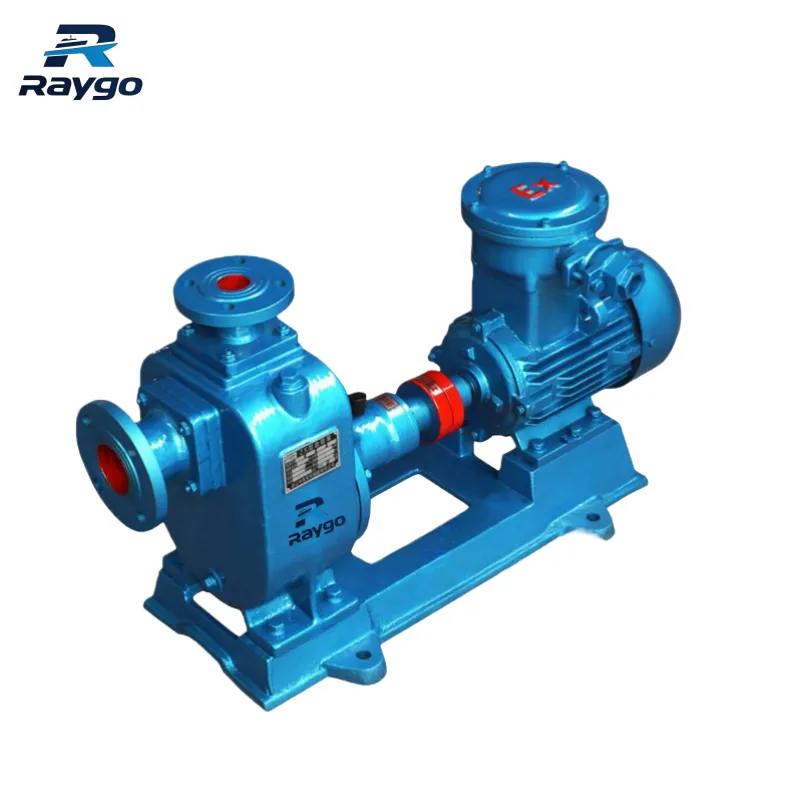
A marine pump is a mechanical device used to transfer or circulate fluids through piping systems on ships and offshore vessels. Depending on the application, pumps may remove bilge water, transfer fuel, circulate lubricating oil, supply cooling water, fill or empty ballast tanks, handle sewage, or move seawater and freshwater through auxiliary systems.
The required pump performance depends on the fluid, the system duty point, suction conditions, pressure requirements and the vessel’s operating environment.
How Do Different Marine Pumps Work?
Marine pumps can be grouped by working principle into positive-displacement pumps, dynamic pumps and ejector-type devices. The categories describe how energy is transferred to the fluid; they do not by themselves determine whether a pump is suitable for a specific shipboard system.
Positive Displacement Pumps
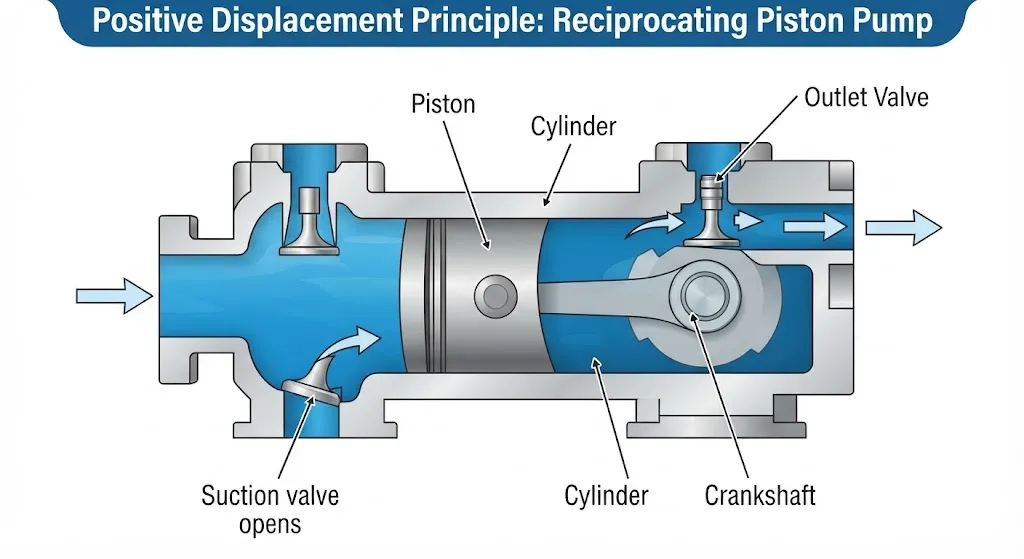
Positive-displacement pumps move fluid by trapping a defined volume and forcing it from the suction side to the discharge side. Common marine examples include piston, gear, screw and diaphragm pumps.
They are often considered where stable flow, higher discharge pressure or higher-viscosity fluids must be handled. Actual suitability depends on fluid cleanliness, speed, clearances, materials, seal arrangement and the required duty point.
Dynamic Pumps
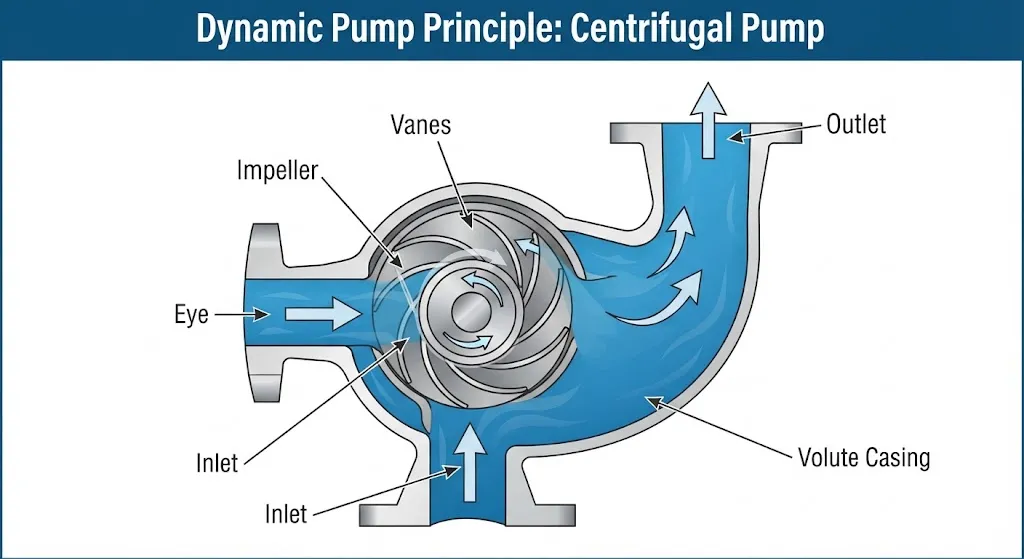
Dynamic pumps transfer energy to the fluid through a rotating impeller or similar element. Centrifugal pumps are common on ships because they can provide continuous flow for relatively low-viscosity liquids in cooling, ballast and seawater circulation systems.
Vortex or recessed-impeller designs may be considered where the fluid contains certain suspended solids or where a less restrictive flow passage is required, subject to the actual particle size and duty conditions.
Ejector Pumps
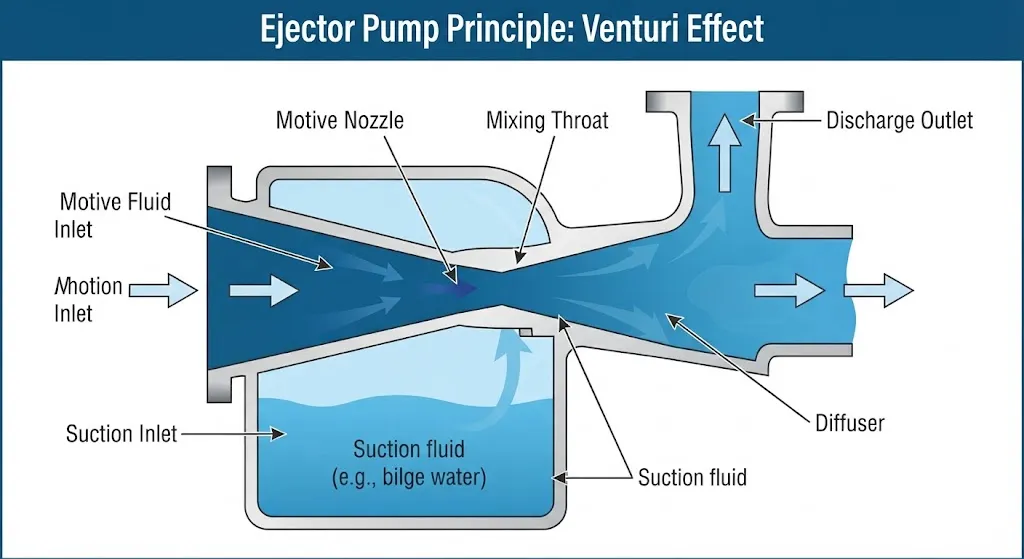
Ejector pumps use a high-velocity motive fluid to create a low-pressure region that entrains and transports another fluid. They have few conventional moving parts and can be used in selected bilge, sewage, sludge or stripping applications where the available motive-fluid condition makes the arrangement practical.
Because ejector performance depends strongly on motive-fluid pressure and flow, the ejector should be evaluated as part of the complete system rather than as a direct substitute for a mechanically driven pump.
Centrifugal vs. Positive-Displacement Marine Pumps
| Selection Factor | Centrifugal Pump | Positive-Displacement Pump |
| Typical flow characteristic | Continuous flow; flow varies with system resistance. | A defined volume is displaced each cycle or revolution; flow is more directly related to speed. |
| Common media | Seawater, freshwater and other relatively low-viscosity liquids. | Fuel oil, lubricating oil and other higher-viscosity liquids, depending on pump design. |
| Typical duty | High-flow circulation and transfer. | Stable transfer, metering or relatively higher-pressure duties. |
| Viscosity sensitivity | Performance can decrease as viscosity increases. | Often better suited to higher-viscosity media. |
| Suction / priming | Depends on pump arrangement; self-priming is not automatic for every centrifugal design. | Some designs provide stronger suction capability, but actual suction limits still require verification. |
| Solids handling | Depends strongly on impeller and passage design. | Depends on type; gear/screw clearances can be vulnerable to abrasive or large solids. |
| Important selection risk | Operating too far from the intended duty point, cavitation, low NPSH margin. | Overpressure if discharge is restricted; relief/bypass protection may be required depending on system design. |
| Technical note: This table is a general engineering comparison, not a universal product rule. Final selection must follow the actual pump curve, fluid data and system requirements. |
Which Marine Pumps Are Used in Different Shipboard Systems?
| Shipboard System | Typical Medium | Common Pump Direction | Key Selection Consideration |
| Bilge / oily water | Bilge water, oily water | Centrifugal, diaphragm, piston or ejector depending on arrangement | Suction capability, self-priming requirement, solids/debris and oily-water characteristics. |
| Fuel transfer | Diesel / fuel oil | Gear, screw or selected centrifugal designs | Viscosity, temperature, flow stability, seal compatibility and heating condition. |
| Lubricating oil | Lube oil | Gear, screw or selected centrifugal designs | Viscosity, continuous duty, pressure stability and oil cleanliness. |
| Cooling water | Seawater / freshwater | Centrifugal | High continuous flow, suction/NPSH, corrosion compatibility and maintainability. |
| Ballast | Seawater | Centrifugal | High flow, seawater compatibility, suction arrangement and system resistance. |
| Sewage / sludge | Wastewater, sewage, sludge | Vortex, diaphragm, ejector or suitable solids-handling designs | Solids size, clogging risk, abrasion, corrosion and cleaning access. |
| Fire-fighting | Seawater / freshwater | Centrifugal or approved arrangement | Required flow/head, suction reliability, emergency operation and applicable vessel requirements. |
| Boiler / condensate service | Feedwater / condensate | Application-dependent centrifugal or positive-displacement design | Temperature, NPSH, pressure, continuous duty and system specification. |
Key Marine Pump Selection Factors
Flow Rate
Flow rate is the volume the pump must deliver per unit time. Selection should be based on the actual system demand and the pump curve rather than on pipe diameter alone.
Total Head
Required head must include static elevation plus losses through piping, valves, fittings, strainers, heat exchangers and other components. Lifting height alone is not the total head.
Medium
Identify the exact fluid and whether it contains water, oil, sludge, suspended solids, air or other contaminants. Fluid properties affect pump principle, materials, clearances and seal selection.
Temperature
Temperature can change viscosity, vapor pressure, material compatibility and seal performance.
Pressure
Check normal operating pressure, maximum pressure and any system pressure limit. Positive-displacement systems may also require appropriate relief protection.
Viscosity
Viscosity can significantly change pump performance. Higher-viscosity oil duties often require a different pump approach from low-viscosity water duties.
Corrosion and Erosion
Seawater and other aggressive or particle-laden fluids require appropriate wetted materials and consideration of corrosion, erosion and galvanic compatibility.
Power Supply
For motor-driven pumps, confirm motor power, voltage, frequency, phase, enclosure/protection requirement and any hazardous-area requirement where applicable.
Maintenance Access
Installation should allow access to couplings, seals, bearings, covers and removable components, not merely fit within the available footprint.
Suction Conditions, NPSH and Cavitation Risk
A pump can have the correct nominal flow and head and still perform poorly if the suction side is not suitable. Selection should therefore consider whether the pump has flooded suction, suction lift or a self-priming requirement, as well as suction-pipe losses and possible air leakage.
For centrifugal pumps, the available Net Positive Suction Head (NPSH available) should provide adequate margin over the pump’s NPSH required at the intended operating point. Insufficient suction pressure can contribute to cavitation, noise, vibration, unstable flow and impeller damage.
Cavitation symptoms should not automatically be attributed to the pump itself; suction blockage, high fluid temperature, restricted strainers, excessive suction lift or air ingress can create similar operating problems.
Material and Seal Compatibility
Marine pump material selection should consider all wetted components, including the casing, impeller or rotor, shaft, wear parts and sealing system. The correct choice depends on the medium, temperature, corrosion risk, solids content and project specification.
Seal selection should also be checked against fluid compatibility, operating pressure, temperature and expected maintenance practice. A material that is suitable for seawater service may not automatically be the correct choice for fuel oil, lubricating oil, sewage or another medium.
Common Mistakes When Selecting a Marine Pump
- Selecting a pump only by pipe diameter or flange size.
- Treating vertical lifting height as the complete pump head.
- Comparing flow rate without checking the full system resistance.
- Ignoring suction conditions, NPSH margin or self-priming requirements.
- Using a pump intended for low-viscosity water service on a high-viscosity oil duty without verification.
- Ignoring solids size, sludge, fibers or abrasive particles in the pumped medium.
- Ignoring seawater corrosion or material compatibility.
- Replacing an old pump based only on a photograph or model name.
- Forgetting voltage, frequency, motor power, rotation and installation footprint.
- Checking installation space but not maintenance and removal clearance.
Marine Pump Selection Data Checklist
| Parameter | Information to Provide |
| Medium | Exact fluid: seawater, freshwater, diesel, fuel oil, lube oil, bilge water, sewage, sludge, etc. |
| Flow rate | Required / normal / maximum flow, with unit. |
| Total head | Required system head or available duty point. |
| Suction condition | Flooded suction, suction lift, self-priming requirement, suction level and pipe arrangement. |
| Working pressure | Normal and maximum system pressure. |
| Temperature | Normal and maximum fluid temperature. |
| Viscosity | Especially important for fuel oil and lubricating oil. |
| Solids / contamination | Particle size, sludge, fibers, sand or suspended solids if present. |
| Material requirement | Any vessel, owner or medium-specific material requirement. |
| Seal requirement | Mechanical seal, packing or other requirement if specified. |
| Power supply | Motor power, voltage, frequency, phase and any protection requirement. |
| Connection | Pipe size, flange/thread standard, inlet/outlet orientation. |
| Installation | Available dimensions, base footprint, mounting orientation and service clearance. |
| Certification | State any classification-society or project documentation requirement. Raygo can provide the required classification-society certificates for the project. |
| Existing equipment | Manufacturer, model, nameplate, photo, drawing, serial number if available. |
Conclusion
Different marine pumps are designed for different fluids, system duties, and operating conditions. A suitable pump should be selected from the actual duty point and fluid properties, together with suction conditions, pressure, temperature, viscosity, materials, power supply, installation and maintenance requirements.
For a project-specific pump review, prepare the medium, required flow rate, total head, suction condition, working pressure, operating temperature, viscosity, solids content, material requirement, connection standard, motor data, installation space, and any existing pump nameplate, drawing, or photo. If you need help selecting a suitable marine pump, contact Raygo to discuss your application and requirements.s.
Frequently Asked Questions
Is a centrifugal pump always the best choice for seawater?
Centrifugal pumps are widely used for seawater circulation because they can provide continuous high flow, but the final selection still depends on head, suction conditions, materials, duty point and maintenance requirements.
What is the difference between flow rate and head?
Flow rate describes how much fluid is moved, while head represents the energy the pump must provide to overcome elevation and resistance in the system. Both are needed to define the duty point.
Why is NPSH important for a marine pump?
NPSH is used to evaluate suction conditions and cavitation risk. A pump may not operate reliably if the available suction pressure is insufficient at the required duty point.
Can I select a replacement pump from the flange size alone?
No. Connection size does not define the hydraulic duty. Flow, head, pressure, medium, temperature, motor data, suction condition and physical dimensions should also be checked.
Why are screw or gear pumps often used for oil service?
Positive-displacement designs can be suitable for higher-viscosity fluids and stable transfer, but the actual choice depends on viscosity, pressure, flow, cleanliness and the system design.
What information should I send if the old pump model is unavailable?
Provide nameplate photos, overall photos, drawings, dimensions, inlet/outlet connections, motor data, flow/head if known, medium and operating conditions.
Is a higher-flow pump always better?
No. Excess capacity can move the operating point away from the intended system requirement and may increase energy use or create control and reliability problems.
What can cause cavitation besides an undersized pump?
Possible causes include insufficient suction head, blocked strainers, excessive suction lift, high fluid temperature, restricted suction piping or air leakage.