Raygo Marine supplies compact marine sewage treatment plants for ships, ferries, offshore platforms and workboats. The WCB series can be configured according to vessel type, crew or passenger capacity, installation space, onboard power supply and required discharge standards. For shipyards, shipowners and marine procurement teams, Raygo can support model selection, technical customization and certificate requirements for marine wastewater treatment projects.
Need an IMO-approved sewage treatment plant for your vessel? Send us your vessel type, crew/passenger number, voltage and installation space. Our team will help you select a suitable WCB model.
Before investing in marine sewage treatment plants, consider the key factors that ensure long-term compliance and optimal performance at sea. This article will provide insights into marine sewage treatment plants and the features of modern sewage treatment plants to address such problems.
What is a Marine Sewage Treatment Plant?
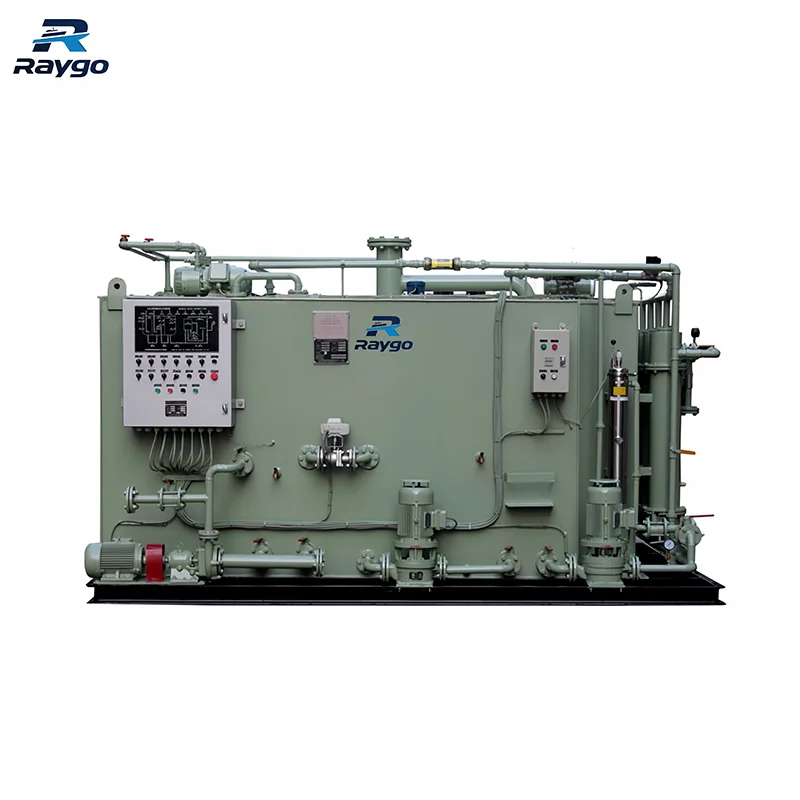
A marine sewage treatment plant treats black water and grey water generated onboard before approved discharge or shore-based disposal. It helps vessels reduce marine pollution and meet applicable sewage discharge requirements under MARPOL Annex IV, flag-state rules and local port regulations.
How Marine Sewage Treatment Plants Work?
A marine sewage treatment system usually combines screening, biological treatment, solid-liquid separation and final disinfection. Depending on the project, the WCB series can be configured with biological contact oxidation, MBR filtration and UV disinfection to meet different vessel operating conditions and discharge requirements.
Why Ships Require Wastewater Treatment?
The primary reasons for onboard sewage treatment are environmental protection and regulation compliance. Commercial ships must conform to stringent international route environmental regulations.
There are various international laws that prevent the dumping of untreated sewage. It is because the release of sewage in its raw form into the ocean may pose health risks. Untreated sewage also introduces nutrients such as phosphorus and nitrogen into the ocean, which disrupts marine life and leads to algae blooms.
Marine STPS play a vital role in protecting the marine environment and minimizing marine pollution by treating sewage before discharge into the sea.
Here are the uses of STPs across marine industries:
- Commercial Ships: Deals with black and grey water on bulk cargo ships or container ships.
- Offshore Platforms: Treat domestic sewage and provide protection for the ecology of operation sites at sea.
- Passenger Ferries: Treats domestic sewage produced by the toilets of the ship’s crew.

Key Features of a Reliable Marine Sewage Treatment Plant
Since each vessel has its own load capacity and operational constraints, the treatment plant must be customizable to fit the given spaces without significant changes.
The following are the features of a robust marine sewage treatment plant:
- Modular design and scalable configurations
- Consistent operations with automated mode
- Pollution-free disinfection
- Resistance to corrosion
- Low maintenance requirements
- IMO certification for assured compliance
- Technical support and spare parts availability
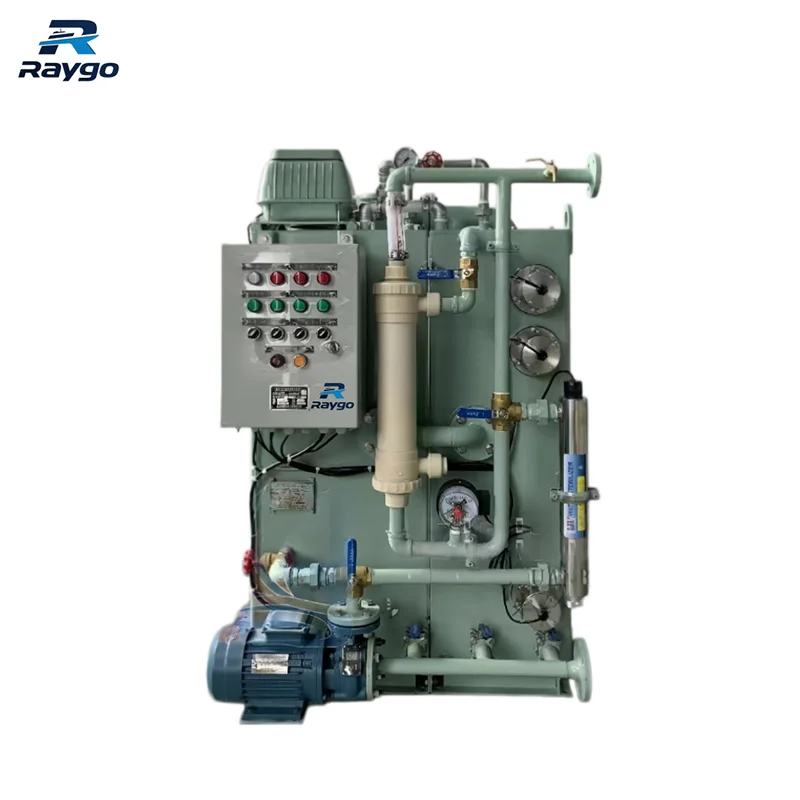
Raygo Marine Equipment provides customizable marine sewage treatment solutions for vessel newbuilding, retrofit and marine procurement projects. The WCB series is designed for compact installation, automatic operation and stable treatment performance in shipboard environments.
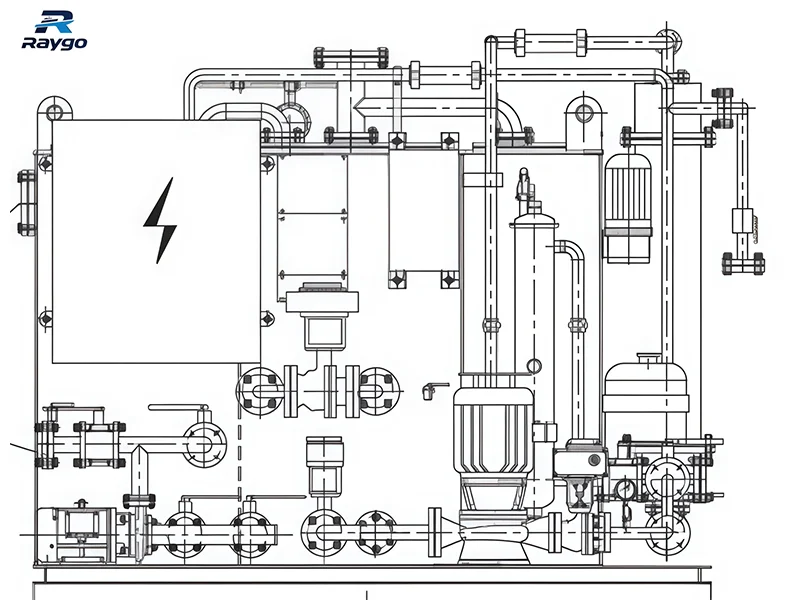
Technical Features and Custom Options
Series | WCB Series Marine Sewage Treatment Plant |
Treatment Process | Biological contact oxidation / MBR filtration / UV disinfection options |
Applications | Ships, ferries, offshore platforms, workboats, newbuild and retrofit projects |
Control System | PLC automatic control; manual operation available |
Power Supply | 380V 50Hz / 440V 60Hz / customized onboard power supply |
Custom Options | Capacity, layout, voltage, connection design, discharge process and certificate requirements |
Certificate Support | IMO / MEPC.227(64) and classification society certificate support according to project requirements |
Inquiry Information Needed | Vessel type, crew/passenger number, sewage volume, voltage, installation space, destination/flag state, certificate requirement and delivery schedule |
Typical Applications
- Commercial ships: bulk carriers, container ships, tankers and cargo vessels requiring onboard black water and grey water treatment.
- Passenger ferries and cruise-related vessels: higher daily sewage load and stronger demand for stable effluent quality.
- Offshore platforms and workboats: compact systems for domestic sewage treatment in limited marine spaces.
- Newbuild and retrofit projects: customized layout, capacity and power configuration based on vessel arrangement.
Why Choose Raygo Marine Equipment?
- Classification Society Certificate Support: Raygo can support major marine certificate requirements according to product scope and project needs. Before publishing, confirm which certificates apply to this exact WCB product model.
- Custom Engineering for Vessel Layouts: Capacity, footprint, voltage, pipe connection and discharge process can be configured based on vessel design and installation space.
- One-Stop Marine Equipment Supply: Raygo can supply sewage treatment plants together with marine pumps, filters, valves, heat exchangers, air receivers and other ship equipment.
- Technical Support and Spare Parts: Raygo supports model selection, installation guidance, spare parts supply and long-term maintenance communication.
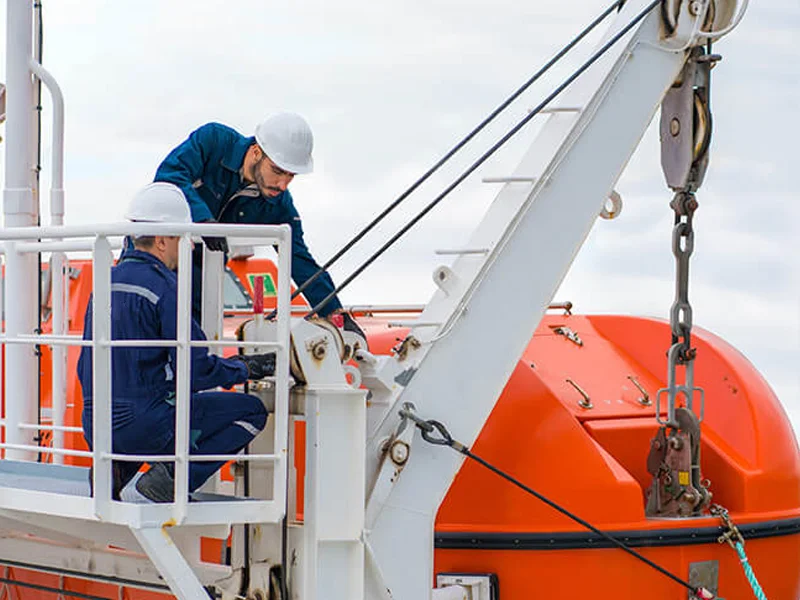
Request a quote for a customized marine sewage treatment plant.
Please include vessel type, crew/passenger capacity, sewage volume, voltage, installation space, certificate requirement, quantity and delivery schedule.