The replacement should first be identified and technically verified against the existing equipment. This means checking the original part number, equipment model, dimensions, connections, materials, operating conditions, and applicable certification requirements before selecting an OEM replacement, qualified alternative, or custom-made part.
Why is this important? Marine spare parts often remains in service for many years, while manufacturers may discontinue older models, replace part numbers, change product lines, or stop producing low-volume components. As a result, an obsolete part can still be required for equipment that remains fully operational.
In practice, an obsolete marine spare part is a technical identification and compatibility problem as much as a sourcing problem. The following process helps shipowners, ship managers, shipyards, and marine procurement teams identify suitable replacements while reducing compatibility and delivery risks.
Why Marine Spare Parts Become Difficult to Source
Marine spare parts can become difficult to source for several different reasons. Understanding which situation applies to your requirement is useful because it determines what information should be collected and how the replacement should be verified.
OEM Discontinuation
Marine vessels and their major systems often remain in service for many years, while individual engines, generators, filters, and other equipment may have shorter production cycles. An OEM may stop producing an older component when a new model or product line is introduced. In that situation, the original equipment may still be in good operating condition, but its original spare part may no longer be available through the normal OEM channel.
Long OEM Lead Times
An original part may still exist in the OEM system and yet be difficult to use for a specific maintenance schedule. Production time, international shipping, and the supplier’s own delivery schedule can create a lead time that is much longer than the vessel’s maintenance window.
Changing Part Numbers
Manufacturers may update part numbers, component designs, or equipment models over time. An old part number is still useful, but it may no longer be enough by itself to identify the correct current replacement. A newer component may exist under a different part number, or additional equipment information may be needed to confirm whether it is directly interchangeable.
Vessel-Specific and Application-Specific Requirements
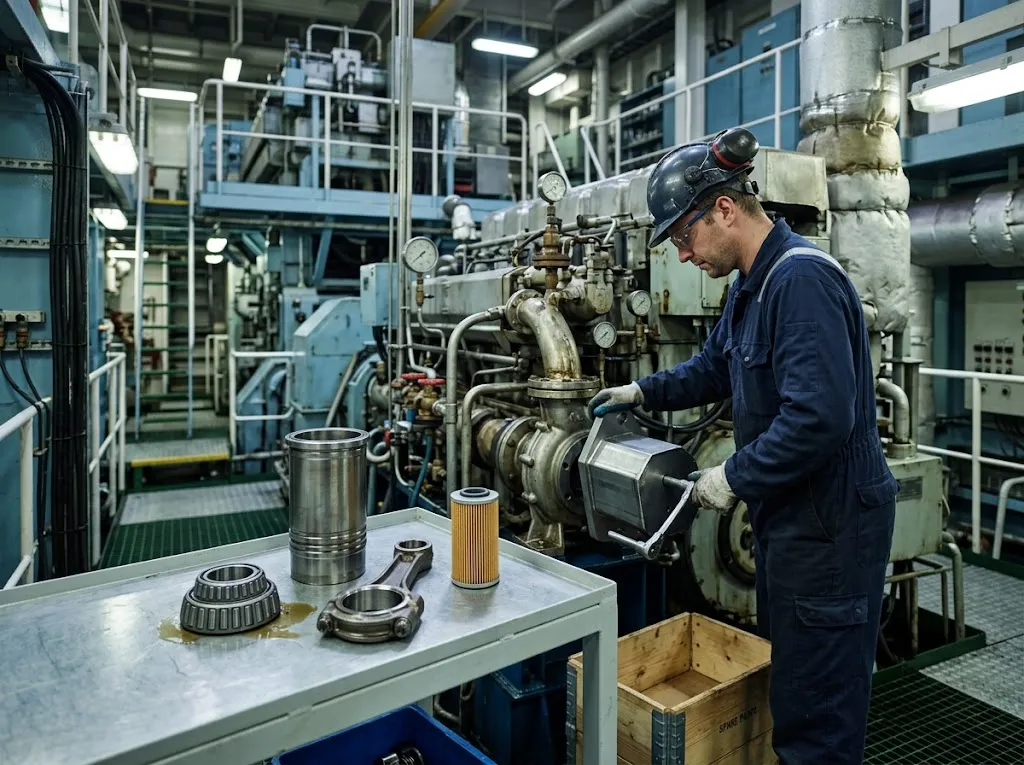
Marine spare parts operate as part of larger mechanical or fluid systems, so compatibility needs to be evaluated in the context of the actual application. Bearings, connecting rods, cylinder liners, and filter elements, for example, do not all rely on the same technical information. The details required for one component may be different from those needed for another.
A suitable replacement should therefore not be selected only because its product name, general shape, or appearance is similar. The part needs to be considered against its dimensions, connections, material, specifications, operating conditions, and equipment function. This is one of the reasons why drawings, nameplates, measurements, installation photographs, and existing samples can be so useful for obsolete or difficult-to-identify components.
OEM, Alternative or Drawing-Based Replacement: Which Should You Choose?
When the original marine spare parts are no longer available, the next step is to determine which sourcing route is technically realistic. The table below compares the three main replacement options and the key information required to evaluate each one.
| Option | Best Used When | Main Information to Verify |
| OEM Replacement | The original OEM, equipment information, and part history are still traceable. | Current part number, equipment model, serial number, application, and whether the proposed replacement is interchangeable. |
| Qualified Alternative | The original part is discontinued or difficult to obtain, but the main technical requirements are available. | Dimensions, material, connections, operating conditions, relevant specifications, and application. |
| Drawing-Based / Technically Verified Replacement | A clear current OEM replacement cannot be confirmed, but drawings, measurements, photographs, nameplate details, or an existing sample are available. | Dimensions, mounting points, connections, material requirements, application, and other details shown in the available technical information. |
The correct route depends on the information available for the specific component. The key point is that the replacement method should follow the technical evidence. If the OEM history is clear, that information can be used first. If the part number is obsolete or incomplete, drawings, dimensions, photographs, and application data become more important. If several sources of information are available, they should be reviewed together rather than relying on a single detail.
How to Verify Alternative Marine Spare Parts Before Buying
For obsolete marine spare parts, finding a possible replacement is only the first step. The proposed part still needs to be checked against the existing equipment. The original document already provides the key verification categories; the following structure simply brings them together in one place so that procurement teams can use them as a practical buying guide.
1. Confirm the Equipment Information
Start with the equipment rather than the spare part alone. Record the equipment name, manufacturer or OEM, model, and serial number. If a nameplate is available, provide a clear photograph. These details help establish which equipment version the spare part belongs to and give the supplier a more reliable basis for identifying the requirement.
2. Collect the Original Part Information
Provide the original part name, OEM, part number, drawing number, assembly number, or any previous part information that is still available. Even if the old part number is no longer active, it can still help the supplier identify the component and understand its relationship to the equipment.
3. Check Dimensions, Connections and Mounting Details
Dimensions are essential when a replacement has to fit an existing installation. Depending on the component, useful information may include length, width, diameter, thickness, connection sizes, and mounting dimensions. Clear dimensioned photographs can also be helpful when a formal drawing is not available.
4. Confirm Material and Relevant Specifications
The replacement should also be checked against the material and performance information required by the original application. Depending on the component, this may include material, pressure or temperature rating, flow rate, filtration rating, or other relevant specifications listed in the available documents or equipment data.
5. Describe the Application and Operating Conditions
Application information helps explain how and where the component is used. Useful details can include the working medium, operating conditions, equipment function, and any other application-specific requirements that are known. These details give technical context to the dimensions and specifications provided elsewhere in the inquiry.
6. Use Drawings, Photos or an Existing Sample When Available
For obsolete or difficult-to-identify parts, drawings and photographs can become the main source of technical evidence. Customers can provide technical drawings, product drawings, assembly drawings, or dimensioned drawings. Clear photos of the part, equipment nameplate, installation position, and measured dimensions can also support identification.
Marine Spare Parts Sourcing Checklist: What to Prepare Before Requesting a Quote
A complete inquiry does not need to contain every possible item, but providing the information that is available can make technical identification and replacement verification more efficient. The following checklist is based directly on the information requested in the original article.
| Information | What to Provide |
| Equipment | Equipment name, manufacturer/OEM, model, serial number |
| Original Part | Part name, OEM, part number, drawing or assembly number |
| Dimensions | Length, width, diameter, thickness, connection and mounting dimensions |
| Specifications | Material, pressure/temperature rating, flow rate, filtration rating, certification requirement, or other relevant requirements |
| Application | Working medium, operating conditions, and equipment function |
| Drawings | Technical, product, assembly, or dimensioned drawings |
| Photos | Part, nameplate, installation, and dimension photos |
| Existing Sample | Damaged part or existing component, if available |
| Quantity | Required quantity |
| Delivery | Expected delivery time or required delivery date |
For obsolete or difficult-to-identify marine spare parts, the most useful starting information is often the original part number together with drawings, dimensions, and clear photographs. If some of these items are unavailable, send the information you do have rather than waiting for a complete package. The supplier can then identify what additional details are needed for verification.
How Raygo Handles OEM and Drawing-Based Replacement Requests
When the original marine spare parts are discontinued or unavailable, Raygo can work from the available OEM information, part numbers, technical drawings, and component details to identify a suitable replacement route. The process remains focused on the same technical verification principles described above.
Step 1: Review OEM and Part Information
If the original OEM and part number are available, Raygo first uses them to identify the required component and its application. Equipment model, serial number, and previous part information can also be reviewed to help confirm that the request relates to the correct equipment and component.
Where an old part number has been replaced or is no longer clear, the inquiry can be cross-checked against the rest of the available equipment information rather than relying on the number alone.
Step 2: Work from Technical Drawings and Available Component Data
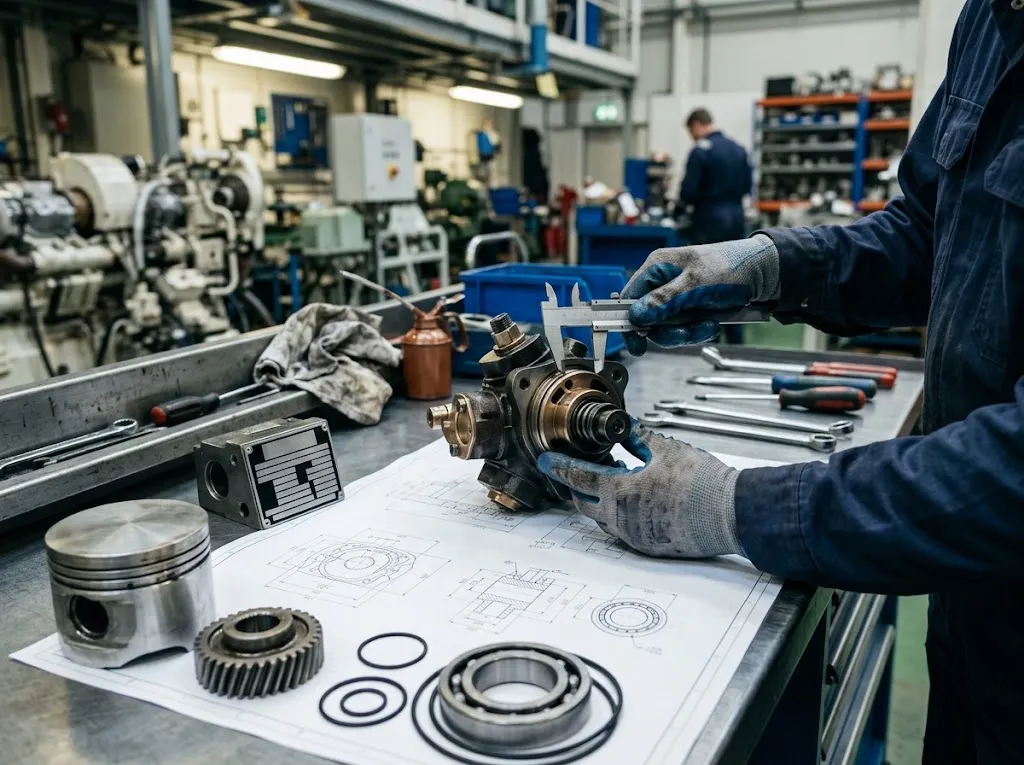
For obsolete marine spare parts or requests without a clear part number, customers can provide technical drawings, assembly drawings, or dimensioned drawings. Raygo can review key details such as dimensions, mounting points, connections, and material specifications to understand the original component requirements.
Photographs, nameplate information, measured dimensions, and other documentation can be added when drawings are incomplete or unavailable. The purpose of this step is to establish a clear technical basis for the replacement before the quotation is finalized.
Step 3: Verify the Replacement Requirements
The available OEM information and drawings are compared with the proposed replacement. Depending on the part, the review may include dimensions, material, connection type, operating conditions, and other application-specific specifications.
This step is intended to check the requirements that are relevant to the specific component. Because different parts such as bearings, connecting rods, cylinder liners, and filter elements have different technical characteristics, the verification should follow the information appropriate to that part rather than use a one-size-fits-all checklist.
Step 4: Confirm the Requirement Before Quotation
After the technical information has been reviewed, the replacement requirements can be confirmed with the customer before a quotation is prepared. If additional information is required, Raygo can request photos, nameplate details, measurements, drawings, or other documentation to support the identification process.
Required quantity and expected delivery time should also be confirmed at this stage. This keeps the technical requirement and the purchasing requirement connected before the final quotation is issued.
Need Help Finding Obsolete Marine Spare Parts?
If the original marine spare parts are no longer available, do not start by selecting an alternative only from its name or appearance. Send the information you already have so the requirement can first be identified and technically reviewed.
Useful information can include:
- OEM or manufacturer
- Equipment name and model
- Serial number
- Original part number or drawing/assembly number
- Nameplate photo
- Technical or dimensioned drawing
- Dimensions and connection details
- Clear part and installation photos
- Application and operating conditions
- Required quantity
Expected delivery time
Contact Raygo Marine with your marine spare parts requirement for technical evaluation and quotation.