
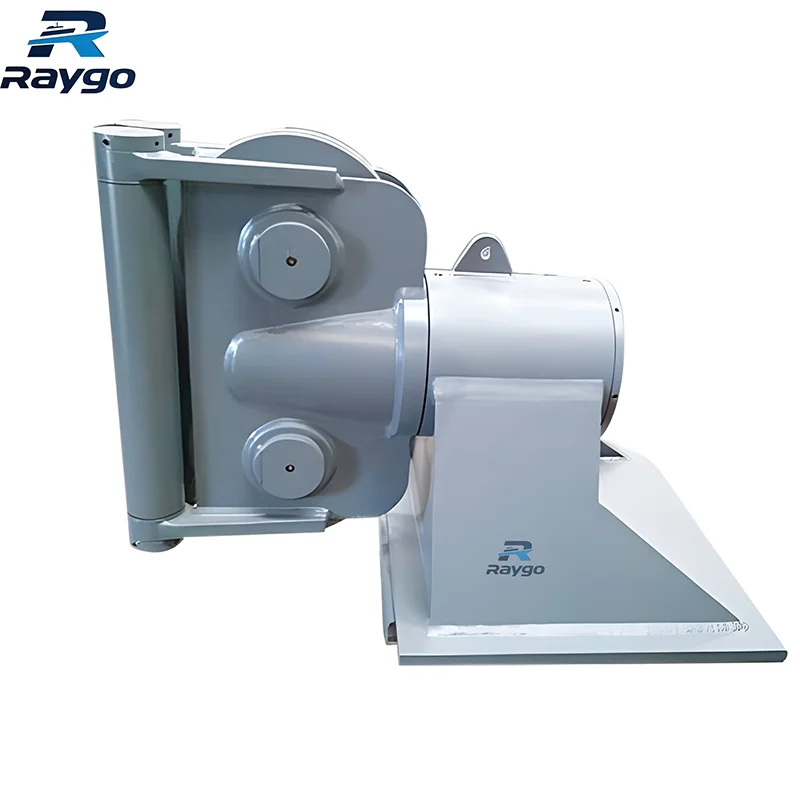
Marine Swivel Fairlead | 360-Degree Mooring Control
- 360-degree swivel fairlead for flexible rope guidance
- Suitable for mooring, towing and offshore deck operations
- Sheave / pulley design helps reduce rope friction and wear
- Automatically follows changing rope direction
- Compact deck-mounted structure for limited deck space
- Suitable for steel wire ropes, synthetic ropes and high-performance ropes
- Custom load rating, rope diameter and sheave groove available
Accreditation and Certificates:
A marine swivel fairlead is a deck-mounted rope guiding device used in ship mooring and towing systems. It is usually installed on the deck and works together with mooring ropes, towing lines, winches, bollards, chocks or other deck fittings.
Unlike a standard fixed fairlead, a swivel fairlead has a rotating body. This rotating structure allows the rope guide to turn freely around the base. When the vessel moves or the rope angle changes, the fairlead can follow the rope direction instead of forcing the rope to rub against a fixed guide surface.
This design is useful for marine operations where the direction of rope tension is not always fixed. It helps reduce rope wear, lower operating resistance and improve the safety and efficiency of deck rope handling.
Technical Specifications:
The final specification of a marine swivel fairlead should be selected according to rope diameter, working load, rope type, deck layout and installation method. Raygo Marine can provide customized designs based on drawings or project requirements.
| Item | Specification |
| Product Name | Marine Swivel Fairlead |
| Rotation | 360 Degrees |
| Rope Type | Steel wire rope, synthetic rope, high-performance rope |
| Installation | Deck-mounted, welded or bolted base |
| Material | Stainless steel, cast steel, anti-corrosion treated steel, customized |
| Application | Mooring, towing, offshore deck operation |
| Custom Options | Load rating, rope diameter, sheave groove, base size |
Key Features:
- 360-Degree Free Rotation360°: The swivel body can rotate 360 degrees around the base. This allows the fairlead to automatically follow the rope direction during mooring, towing or deck handling operations. When the rope angle changes, the fairlead turns with it, helping the rope pass more smoothly.
- Reduced Rope Wear: The sheave or pulley structure helps guide the rope and reduce direct rubbing between the rope and metal surfaces. By changing sliding friction into rolling contact, the fairlead helps protect the rope from excessive wear, surface damage and local cutting.
- Flexible Multi-Angle Operation: Marine swivel fairleads are suitable for working conditions where rope direction changes frequently. The rotating structure allows the fairlead to adapt to rope tension from different directions, reducing the need for manual angle adjustment and improving operating efficiency.
- Compact Deck-Mounted Design: The fairlead combines the base, swivel body and rope guide assembly into one compact structure. It occupies less deck space and is suitable for vessels with limited installation space or complex deck arrangements.
- Stable Load Transfer: During operation, rope tension is transferred through the sheave, swivel body and base to the deck foundation. The swivel mechanism helps reduce local stress concentration and supports safer mooring or towing operations.
- Corrosion-Resistant Marine Design: Marine swivel fairleads can be manufactured from stainless steel, cast steel or anti-corrosion treated steel. Marine paint or anti-corrosion coating can be applied to improve durability in high-salt and high-humidity marine environments.
Working Principle:
When rope tension changes direction, the swivel body rotates around the base. Instead of forcing the rope to rub against a fixed surface, the fairlead follows the rope angle. This automatic direction adjustment helps reduce local wear and keeps rope movement smoother.
The load generated by the rope is transferred through the sheave, swivel body and base to the reinforced deck structure. Proper installation is important because the base must safely carry the rope load during mooring or towing operations.
Main Components:
A marine swivel fairlead is mainly composed of a base, a 360-degree rotating main body and a rope guide device with sheave. The base fixes the equipment to the deck, the swivel body provides free rotation, and the sheave assembly guides the rope while reducing friction.
| Component | Function |
| Base | Fixes the fairlead to the deck and transfers load to the deck foundation. |
| Swivel Main Body | Allows 360-degree rotation and helps the fairlead follow rope direction. |
| Sheave / Pulley | Guides the rope and reduces friction during operation. |
| Sheave Groove | Matches rope diameter and keeps the rope stable in the groove. |
| Shaft / Bearing | Supports sheave rotation and swivel movement. |
| Anti-Corrosion Coating | Improves resistance to seawater, salt and humidity. |
Swivel Fairlead vs Standard Roller Fairlead:
A standard roller fairlead is mainly used to guide ropes in relatively fixed directions. It works well when the rope path is stable and the operating angle does not change frequently. However, when the rope angle changes sharply, a fixed roller fairlead may create higher side friction.
A marine swivel fairlead is designed for more flexible operating conditions. Its 360-degree rotating body allows it to follow changing rope directions, making it more suitable for multi-angle mooring, towing and offshore deck operations. For vessels where rope direction changes often, the swivel design helps reduce wear and improve rope handling safety.
Applications:
- Marine Vessels: Used on different types of sea-going vessels for mooring line guidance and deck rope handling.
- Inland Waterway Vessels: Suitable for inland vessels, workboats and service boats where compact deck fittings and flexible rope guidance are required.
- Tugboats and Towing Operations: Used to guide towing lines during towing operations, especially when the rope direction changes during maneuvering.
- Offshore Platforms: Suitable for offshore platforms and marine structures where ropes or lines need to be guided from different directions.
- Offshore Support Vessels: Used on offshore support vessels, AHTS vessels and supply vessels for deck line handling, towing and anchor handling support.
- Wharf and Dock Mooring: Applicable to wharf, dock and port mooring operations where line direction may change due to vessel movement.
- Dynamic Mooring Conditions: Suitable for mooring conditions affected by wind, waves and currents, where rope angles change frequently during operation.
Installation & Maintenance:
Correct installation is important for smooth rotation, stable rope guidance and safe load transfer.
- Install the fairlead on a reinforced deck foundation.
- Confirm the rope lead angle before installation.
- Ensure enough clearance for 360-degree rotation.
- Align the fairlead with the winch, bollard, chock or mooring point.
- The base can be welded or bolted according to deck structure requirements.
- After installation, check whether the swivel body rotates smoothly.
- Make sure the rope passes smoothly through the sheave groove.
- Check welding areas, bolts and base plate condition before operation.
Regular maintenance helps keep the swivel fairlead rotating smoothly and extends service life.
- Regularly inspect the swivel body and sheave for wear.
- Replace heavily worn parts in time.
- Clean the fairlead surface regularly.
- Lubricate the rotating parts to maintain smooth movement.
- Check whether the sheave rotates freely.
- Inspect the sheave groove for damage, sharp edges or excessive wear.
- Check the base, bolts, welds and deck foundation.
- Repaint or repair damaged coating in corrosive marine environments.
- Remove salt, mud and debris after heavy deck operations.
Special attention should be paid to the swivel mechanism, sheave groove and base connection. These areas directly affect rope guidance performance and operating safety.
Custom Options Available:
Raygo Marine can supply customized marine swivel fairleads according to drawings, vessel deck layout, rope diameter, load requirements and installation conditions.
Custom Options
- Safe working load / load rating
- Rope diameter
- Sheave diameter
- Sheave groove profile
- Base plate size
- Welding or bolted installation
- Rotation structure
- Material selection
- Surface coating
- Deck layout requirement
- Drawing-based production
- Certificate requirement
For replacement projects, customers can provide existing drawings, photos, deck layout, rope diameter and working load requirements. Our team can help match a suitable swivel fairlead design.
FAQ :
Q: What is a marine swivel fairlead used for?
A: A marine swivel fairlead is used to guide mooring ropes, towing lines or work lines on ship decks. It helps the rope pass smoothly and reduces friction during mooring, towing and offshore deck operations.
Q: How does a swivel fairlead work?
A: The rope passes through the sheave groove, while the swivel body rotates freely on the base. When the rope direction changes, the fairlead turns with the rope angle and helps reduce local wear.
Q: Why choose a swivel fairlead instead of a standard roller fairlead?
A: A swivel fairlead is suitable for changing rope angles. It can rotate to follow the rope direction, while a standard roller fairlead mainly guides the rope in fixed directions.
Q: Can the fairlead rotate 360 degrees?
A: Yes. The swivel body is designed for 360-degree rotation, allowing the fairlead to guide ropes from different directions.
Q: What ropes are suitable for this swivel fairlead?
A: It can be used with steel wire ropes, synthetic ropes, high-performance fiber ropes, mooring lines, towing lines and work lines.
Q: Can the sheave groove be customized for rope diameter?
A: Yes. The sheave groove can be customized according to rope diameter to provide stable rope seating and reduce local wear.


Contact Us Now
If you would like to have a question then get in touch today, we are ready to assist 24/7.
We welcome your cooperation and we will develop with you.
- Factory-direct Connectivity Solutions.
- High quality, Competitive Price.
- Custom-tailored solutions.
- Problem-solving approach.