
A marine mooring chain is a key component of an offshore mooring positioning system. It is used to secure floating structures in their operating position by connecting the floating structure to seabed anchors or foundation systems.
The upper end of the mooring chain is typically connected to a floating platform, buoy, or floating structure through fairleads or mooring points. The lower end is connected to anchors or seabed foundation structures.
Marine mooring chains are widely used in floating platform systems, buoy mooring systems, offshore engineering projects, and other marine structures that require long-term positioning stability.
Technical Specifications:
| Mechanical Properties – Mooring Chain | |||||||
| Grade | Yield Point (N/mm², min) | Tensile Strength (N/mm², min) | Elongation (%, min) | Reduction Of Area (%, min) | Charpy V-notch | ||
| Test Temperature (°C) | Impact(],min) | ||||||
| Base Part | Weld Part | ||||||
| ORQ (API 2F) | — | 641 | 17 | 40 | 0 | 58 | 49 |
| -15 | 40 | 36 | |||||
| R3 | 410 | 690 | 17 | 50 | 0 | 60 | 50 |
| -20 | 40 | 30 | |||||
| R3S | 490 | 770 | 15 | 50 | 0 | 65 | 53 |
| -20 | 45 | 33 | |||||
| R4 | 580 | 860 | 12 | 50 | -20 | 50 | 36 |
| R4S | 700 | 960 | 12 | 50 | -20 | 56 | 40 |
| R5 | 760 | 1000 | 12 | 50 | -20 | 58 | 42 |
| R6 | 900 | 1100 | 12 | 50 | -20 | 60 | 44 |
Note: Customizable chain diameter, grade, surface treatment, length, attachments, and certification requirements according to the project type and specifications.
Key Features:
- Ultra-High Strength Steel: Manufactured according to R3, R4, and R5 grades, we can now reach R6 to withstand extreme tensile loads in deep water environments.
- Engineered for Fatigue Resistance: Designed and tested to withstand millions of load cycles from environmental forces.
- Superior Corrosion Protection: Uses specialized alloy steel and manufacturing processes to maximize resistance to saltwater corrosion.
- Certified for Offshore Projects: We provide full project documentation and certification to API standards and major class societies.
System Connection:
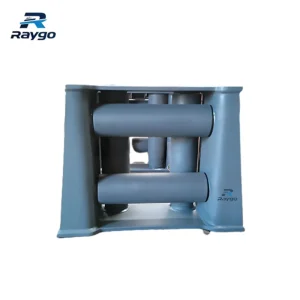
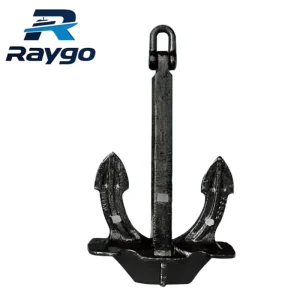
A marine mooring chain is part of a complete offshore mooring system. It works together with floating structures, fairleads, mooring points, connectors, anchors, and seabed foundations.
Typical connection structure:
Floating structure / buoy→ Fairlead or mooring point→ Mooring chain→ Connector or shackle→ Anchor or seabed foundation
This connection helps transfer environmental loads from the floating structure to the seabed anchoring system, keeping the structure in its required operating area.
Advanced Manufacturing & Testing Strength:
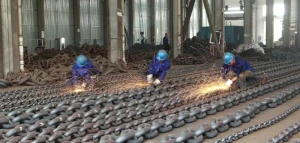
- Advanced Production Equipment & Technology: We deeply understand the critical role of mooring chains in harsh sea conditions. Therefore, our company adopts advanced fully automatic flash butt welding and quenching and tempering technologies to manufacture highly qualified products. The fully automated equipment not only ensures exceptional structural integrity between chain links but also provides them with outstanding load-bearing capacity and deep-water corrosion resistance through precise heat treatment.
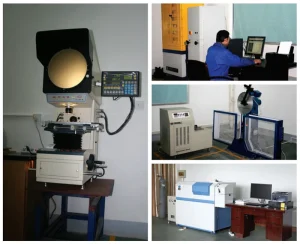
- First-Class Modern Inspection Center: To strictly control product quality, we have established a first-class modern physical and chemical inspection center, introduced advanced testing equipment, and staffed it with professional inspection personnel. From the physical and chemical analysis of raw materials to the tensile and non-destructive testing of finished products, every single mooring chain undergoes a comprehensive and rigorous inspection.
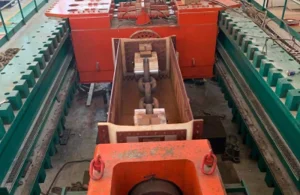
- Top-Tier Fatigue Testing & Lifespan Breakthrough: Fatigue life is the core metric for evaluating the performance of marine mooring chains and the ultimate proof of our manufacturing strength. To achieve this, our company has introduced advanced fatigue testing machines to conduct rigorous fatigue tests on mooring chains across different grades and specifications. Relying on this top-tier equipment, we have accurately plotted the fatigue curves for our mooring chain products. The test data demonstrates that the average lifespan of our chains reaches more than twice the standard design curve, providing incredibly durable and reliable station-keeping assurance for offshore floating platforms.
Applications:
Raygo Marine mooring chains are engineered for extreme durability, making them the ultimate choice for offshore and marine engineering projects that demand long-term positioning and reliable load-bearing performance.
- Offshore Floating Production Platforms (FPSO, Semi-submersibles): Securing massive oil and gas production facilities in deep waters. Our mooring chains ensure these multi-billion-dollar assets remain stationary under severe environmental loads and extreme weather conditions over decades of service.
- Offshore Floating Wind Foundations: Mooring floating offshore wind turbines (FOWT) securely to the seabed. The chains absorb and dissipate dynamic forces from constant wind and wave action, maintaining the stability required for continuous power generation.
- Buoy Mooring & Marine Marking Systems: Providing highly reliable anchoring for CALM (Catenary Anchor Leg Mooring) buoys, navigational buoys, and oceanographic data buoys, preventing drift even in areas with strong tidal currents.
- Floating Docks & Port Terminals: Stabilizing floating dry docks, pontoon bridges, and terminal structures in ports and harbors. The mooring chains adapt to continuous tidal variations while resisting impacts from berthing vessels.
- Offshore Engineering & Construction Vessels: Acting as the primary station-keeping system for crane vessels, pipelay barges, and accommodation platforms during critical offshore operations, ensuring precise positioning for safe operations.
- Deep-Sea Aquaculture & Long-Term Marine Positioning: Securing large-scale deep-sea aquaculture cages and other permanent floating facilities. The chains provide uncompromised structural integrity to protect valuable marine farming investments against ocean storms.
Installation & Maintenance:
Regular offshore inspection and maintenance help improve mooring safety and extend service life.
Recommendations
- Inspect chain wear and corrosion regularly.
- Monitor offshore fatigue conditions during operation.
- Check connecting components and shackles periodically.
- Replace damaged or heavily worn chain sections promptly.
- Follow offshore inspection and maintenance schedules.
Custom Options Available:
Marine mooring chains are usually supplied according to project specifications. Raygo Marine can support customized mooring chain assemblies based on the operating environment, connection method, load requirements, and project documentation requirements.
- Chain diameter
- Chain length
- Chain type
- Surface treatment
- Mooring fittings
- Shackles and connectors
- Testing requirements
- Certificate requirements
Customers can provide drawings, chain diameter, required length, working load, breaking load, application environment, connection fittings, and certificate requirements for quotation.
FAQ :
Q: What is the difference between marine anchor chain and marine mooring chain?
A: A marine anchor chain is mainly used for vessel anchoring. A marine mooring chain is used for long-term positioning of offshore floating structures, buoy systems, and floating platforms.
Q: Why is fatigue testing important for marine mooring chains?
A: Mooring chains are exposed to repeated cyclic loads caused by waves, wind, currents, and floating structure movement. Fatigue testing helps evaluate long-term performance under these operating conditions.