
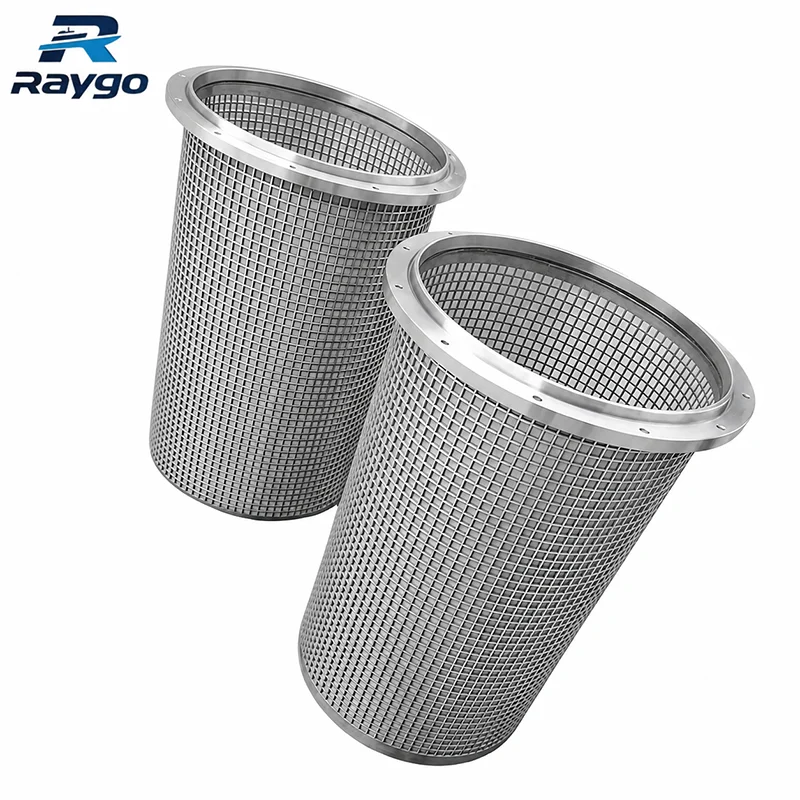
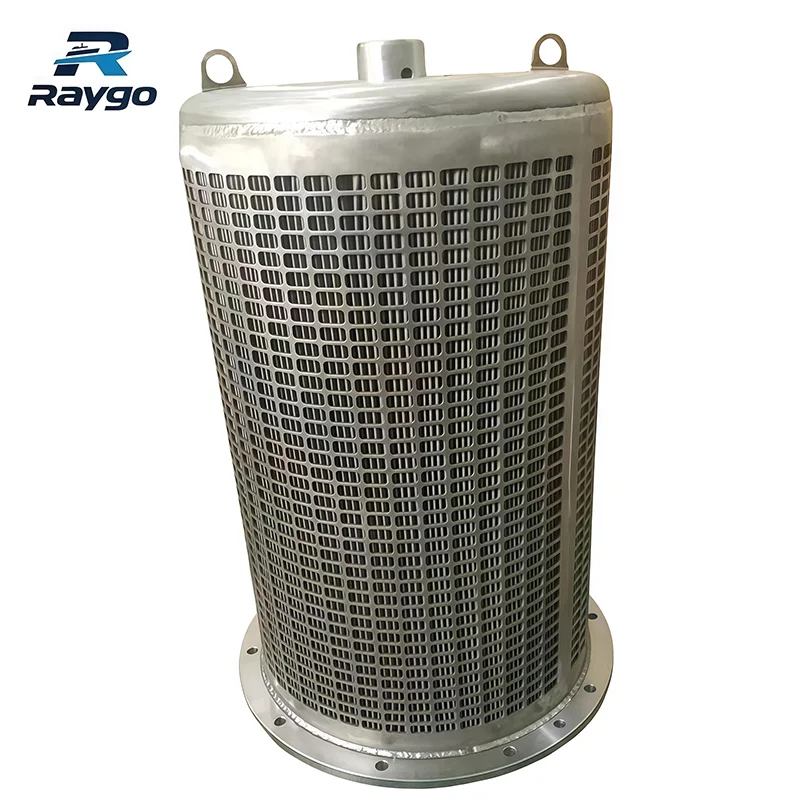
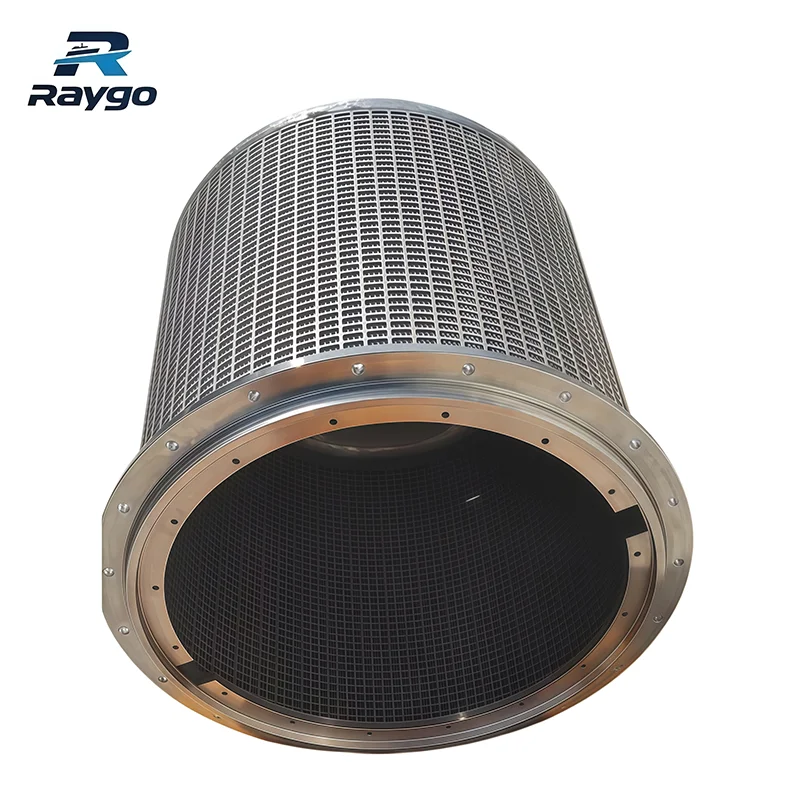
Marine Stainless Steel Ballast Water Filter Element for Seawater and Ballast Water Filtration
Marine stainless steel ballast water filter elements are used for seawater and ballast water filtration in high-corrosion marine environments. Material options may include 316L, 316, duplex stainless steel or customized grades for different seawater conditions.
Accreditation and Certificates:

A marine stainless steel ballast water filter element is a corrosion-resistant water filter element used in ballast water and seawater filtration systems. It filters sediment, plankton and larger particles from seawater while maintaining mechanical stability under flow, pressure and backwash conditions.
The stainless steel structure is especially important in ballast water systems because the filter is frequently exposed to seawater, suspended solids and pressure changes. In many systems, the filter must also withstand repeated backwash cycles. For this reason, material grade, surface strength, support structure and corrosion resistance should be considered during selection.
This product is suitable for vessels that require long-term seawater filtration, high-flow ballast operation and reliable filter performance under marine conditions.
Technical Specifications:
The final specification of a marine swivel fairlead should be selected according to rope diameter, working load, rope type, deck layout and installation method. Raygo Marine can provide customized designs based on drawings or project requirements.
| Parameter | Selection Focus |
| Filter Medium | Seawater / ballast water |
| Material Grade | 316L, 316, duplex stainless steel or customized |
| Flow Rate | Match ballast pump capacity |
| Pressure Drop | Low-resistance operation |
| Backwash Function | Confirm cleaning method |
| Corrosion Resistance | Match seawater and salt-mist environment |
| Structure | Sintered or supported stainless steel structure |
| Interface & Sealing | Match filter housing |
Key Features:
- Marine stainless steel ballast water filter elements are suitable for seawater and ballast water filtration where corrosion resistance and structural strength are important. Stainless steel material helps improve stability in high-salt and high-humidity marine environments.
- The filter can support large-flow filtration and automatic backwash operation when designed accordingly. Different stainless steel grades can be selected according to seawater condition, vessel type, operating route and project requirement.
- For replacement, the material grade should be confirmed together with filtration rating and dimensions. A filter with the correct size but unsuitable material may not perform well in a corrosive seawater environment.
Difference from Standard Ballast Water Filter Element:
| Standard Ballast Water Filter Element | Stainless Steel Ballast Water Filter Element |
| Focuses on ballast water pre-filtration function | Focuses on corrosion resistance and structural strength |
| Removes sediment, plankton and large particles | Designed for seawater corrosion and backwash conditions |
| Selected mainly by filtration rating and flow rate | Also selected by material grade and corrosion condition |
| Used in general ballast water treatment systems | More suitable for long-term seawater exposure |
Stainless Steel Material Options:
| Material | Suitable Condition |
| 316 / 316L Stainless Steel | Regular seawater and common marine applications |
| Duplex Stainless Steel 2205 / 2507 | Higher strength and better pitting resistance requirement |
| Super Duplex Stainless Steel | Harsher corrosion and higher strength requirements |
| Titanium Option | Special vessel or extreme marine environments |
| Customized Material | Selected according to project requirement |
Structure and Strength Design:
Marine stainless steel ballast water filter elements may use a composite structure consisting of a protective layer, filter layer and support layer. Depending on the system design, sintered or integrated structures may be used to improve strength, filtration stability and resistance to pressure impact.
The stainless steel filtering surface should resist deformation during large-flow operation and backwash cycles. The support structure should maintain filter accuracy and prevent collapse or distortion. The end connection and sealing position should also match the filter housing to prevent leakage or bypass.
Working Principle:
Seawater or ballast water passes through the stainless steel filter surface. Sediment, plankton and large particles are retained on the filter layer, while filtered water flows to the downstream system.
When contaminants accumulate on the filter surface, pressure difference increases. If the filter is installed in an automatic backwash system, the backwash process can remove contaminants from the stainless steel surface and discharge them through the drain outlet. This helps restore filtration performance without frequent manual removal.
Structure and Material Features:
| Structure Layer | Function |
| Protective Layer | Provides external protection and strength |
| Filter Layer | Captures sediment, plankton and large particles |
| Support Layer | Maintains stability under flow and pressure |
| Sintered / Integrated Structure | Improves strength and filtration stability |
| Backwash-Compatible Surface | Allows contaminants to be removed during cleaning |
Applications:
- Ballast Water Treatment System: Long-term seawater filtration.
- Ocean-going Vessels: High flow and continuous seawater exposure.
- Offshore Vessels: Corrosion and sediment challenges.
- Special Vessels: Higher material and strength requirements.
- High-Salinity Sea Areas: Better corrosion resistance required.
- Automatic Backwash Filters: Repeated cleaning and pressure impact.
Selection Guide:
When selecting a marine stainless steel ballast water filter element, customers should confirm seawater condition, vessel type, operating route, filtration rating, flow rate, pressure drop and backwash method.
For regular seawater applications, 316 or 316L stainless steel may be considered. For high-salinity, high-chloride or more corrosive environments, duplex stainless steel may be selected according to project requirements. For special vessels or extreme marine environments, higher-grade materials may be required.
In addition to material, the filter must also match the original housing size, sealing position, backwash structure and system flow demand.
Replacement and Compatibility:
Raygo Marine can help match stainless steel ballast water filter elements according to original model, drawing, sample, photo or dimensions.
Useful information includes material grade, filtration rating, length, diameter, interface structure, support structure, backwash compatibility, flow capacity and quantity. Photos of the filter surface, end structure and connection position are helpful for replacement checking.
Maintenance and Inspection:
Stainless steel ballast water filter elements should be inspected regularly for blockage, deformation, corrosion, pitting, surface damage and sealing problems. Backwash performance should also be checked during operation.
In high-salt or high-sediment waters, inspection frequency may need to be increased. If the filter surface is damaged, severely corroded or unable to maintain normal filtration performance, the filter element should be replaced.
Operators should also check whether the backwash process can remove contaminants effectively. If contamination remains on the filter surface after backwash, manual inspection or replacement may be required.
FAQ :
Q: Why is stainless steel used for ballast water filter elements?
A: Stainless steel is used because ballast water filter elements work in seawater and high-salt marine environments where corrosion resistance is important.
Q: What stainless steel grades are available?
A: Common options include 316, 316L, duplex stainless steel and customized higher-grade materials according to project requirements.
Q: Can this filter be used with automatic backwash systems?
A: Yes, when the filter structure and housing are designed for backwash compatibility.
Q: How do I choose between 316L and duplex stainless steel?
A: 316L may be used for regular seawater conditions. Duplex stainless steel may be more suitable for harsher corrosion or higher strength requirements.
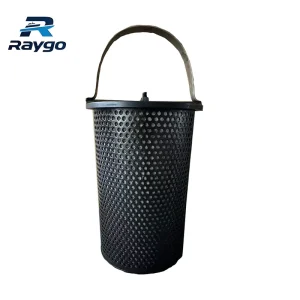
Contact Us Now
If you would like to have a question then get in touch today, we are ready to assist 24/7.
We welcome your cooperation and we will develop with you.
- Factory-direct Connectivity Solutions.
- High quality, Competitive Price.
- Custom-tailored solutions.
- Problem-solving approach.