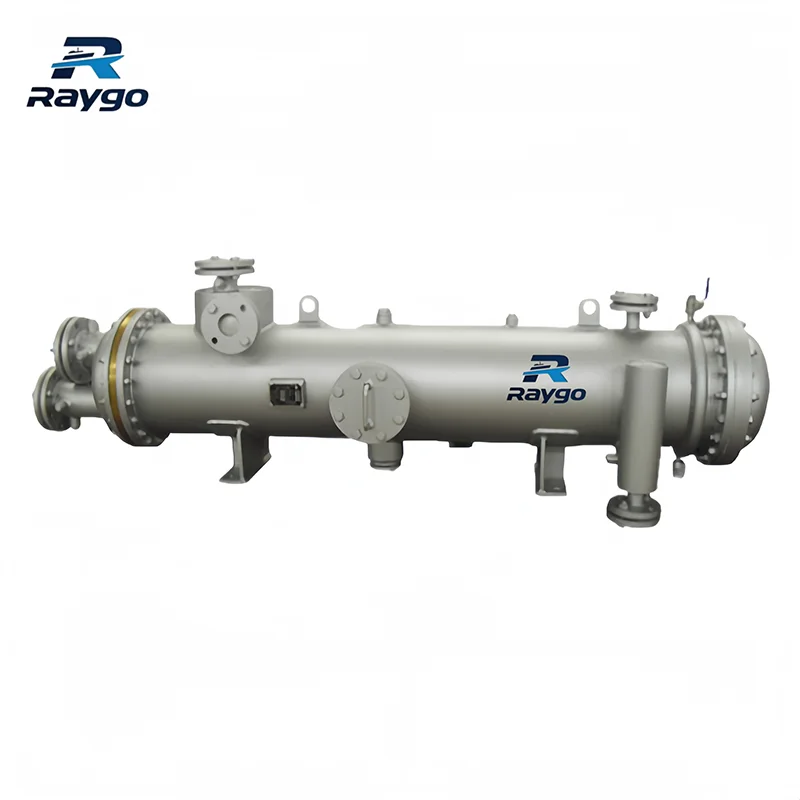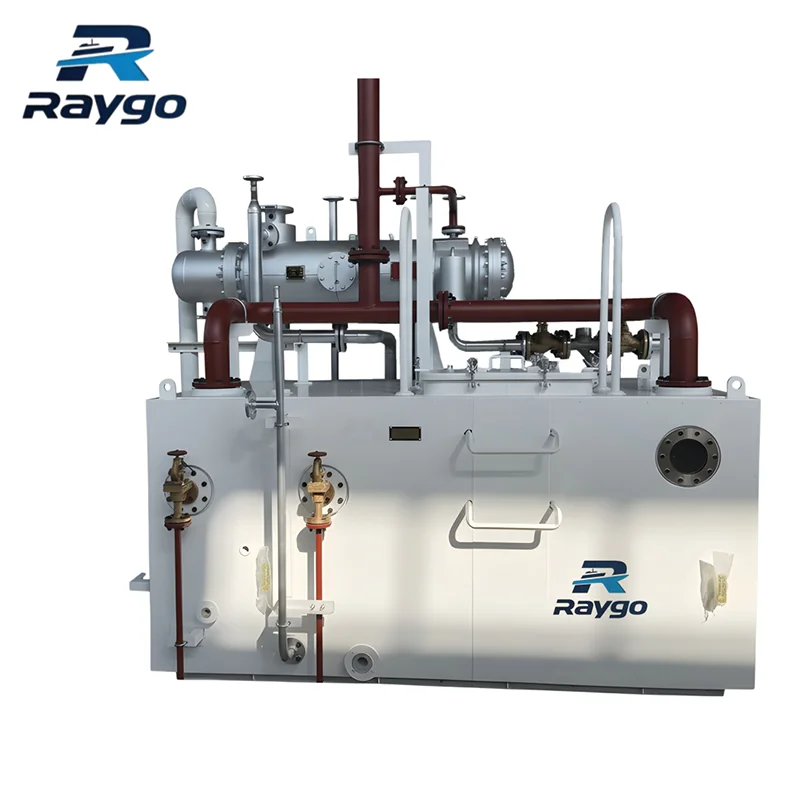
Marine oil filters are used in shipboard lubricating oil, hydraulic oil and fuel oil systems to remove solid particles, wear debris, sludge and other contaminants from circulating oil. Some filter designs can be configured for more than one oil service, but the final selection should still be based on the oil type, viscosity, pressure, temperature, seal material, filter element and required filtration rating.
For marine equipment, a filter should not be selected only by connection size or appearance. Flow rate, pressure drop, element area, bypass valve setting, corrosion risk, maintenance access and certificate requirements all affect whether the selected filter can operate safely in the actual system.
This article explains how marine oil filters work, how simplex and duplex filters differ, what technical data should be checked before selection, and which operating symptoms may indicate blockage, leakage or incorrect specification.
What Is a Marine Oil Filter?
A marine oil filter is a filtration device installed in a vessel oil circuit. Its purpose is to remove contaminants from oil while keeping enough flow to the protected equipment. Depending on the system, the filter may serve a lubricating oil circuit, a hydraulic oil circuit or a fuel oil circuit.
Although some Raygo oil filter designs can be adapted for lubricating oil, hydraulic oil and fuel oil, these applications should not be treated as identical. Oil viscosity, temperature, pressure, contamination type and seal compatibility must be checked for each project.
How Marine Oil Filtration Works
In a typical full-flow arrangement, the oil pump sends oil through the filter before the oil reaches bearings, gears, pumps, valves or other moving parts. The filter element captures particles as the oil passes through the media. Filtered oil then returns to the circuit.
As contaminants build up inside the filter element, the pressure difference between the inlet and outlet increases. This is differential pressure. A rising differential pressure can indicate element blockage, cold and viscous oil, excessive flow, an undersized element area or an element that does not match the system.
Differential pressure should be monitored before it reaches a level that causes flow restriction or bypass valve opening. If a pressure alarm or differential pressure switch is fitted, an alarm should be handled according to the equipment manual and actual operating conditions.
Main Contaminants in Marine Oil Systems
| Contaminant | Why it matters |
| Metal particles | Iron, steel and other wear particles may come from bearings, gears, pumps or other moving parts. |
| Carbon deposits and soot | Engine operation and oil ageing can introduce carbonaceous deposits into the lubrication system. |
| Sludge and oxidation products | Heat, oil degradation and contamination can create sticky deposits that reduce oil cleanliness. |
| Water | Water can enter through condensation, leakage or poor storage. It can increase corrosion risk and reduce lubrication quality. |
| Rust and corrosion debris | Moisture, salt-laden air and inactive periods can contribute to corrosion products in the system. |
| Seal or gasket fragments | Maintenance work or component ageing can release fragments into the oil circuit. |
Filter Media and Filtration Rating
Raygo confirmed that glass fiber, stainless steel, mesh elements and magnetic components can be used in different oil filter configurations. The right choice depends on the required filtration precision, oil type, cleaning method, pressure condition and service environment.
| Element type | Technical note |
| Glass fiber | Suitable where finer filtration is required. It can be used for lubricating oil, hydraulic oil and fuel oil when the system specification allows it. |
| Stainless steel element | Useful where corrosion resistance and mechanical strength are required. It can be used for lubricating oil, hydraulic oil and fuel oil depending on the model. |
| Mesh element | Suitable for cleanable and higher-pressure applications, subject to model design and filtration requirement. |
| Magnetic component | Used to capture ferromagnetic particles such as iron and steel debris. Raygo confirmed this is generally included in oil filter elements, and the simplex filter magnetic component is a standard configuration. |
Raygo confirmed that 25 microns is an absolute filtration rating for its oil filter information. If a buyer requires beta ratio, test method or detailed filtration efficiency, these should be confirmed for the selected element model before order confirmation.
| Technical caution: A lower micron value is not automatically better. Finer filtration can increase differential pressure if the element area, oil viscosity and flow rate are not suitable. |
Pressure Rating and DN Range
The DN size describes nominal connection size. It does not fully define flow capacity, pressure drop or element dirt-holding capacity. Flow rate and pressure drop depend on filtration rating, element area, oil viscosity and selected model.
| Item | Confirmed or revised wording |
| Simplex filter DN range | DN15 to DN400 configurations are available, depending on the selected model. |
| Duplex filter DN range | Generally DN20 to DN200. If DN15 duplex is required, confirm by model before publication or quotation. |
| Typical mounting | The filter is usually mounted to the foundation by bolting the mounting feet or support angle to the base. |
| Working pressure | Many standard models operate below 0.5 MPa. Some applications require models above 0.5 MPa. |
| Common low-pressure reference | For some common low-pressure models, working pressure may be 0.3 MPa, design pressure 0.45 MPa and test pressure 0.675 MPa. Final values must follow the selected model and drawing. |
Housing Materials and Seal Materials
Housing material should be selected according to oil type, pressure, installation environment, corrosion risk and project specification. Raygo confirmed that its listed carbon steel, stainless steel and cast housings do not use coating as a standard statement, so wording such as corrosion-proof coating should not be used unless a specific coating is confirmed.
| Housing material | Available options |
| Carbon steel | Marine carbon steel such as Q235B or Q345R. |
| Stainless steel | 304, 316L, duplex stainless steel 2205 or 2507, subject to project requirement. |
| Cast material | ZG230-450, HT200 or QT400, subject to selected filter type. |
Seal materials should be selected according to oil type, operating temperature, pressure and chemical compatibility. Raygo provided the following reference temperature ranges. The final choice should still follow the oil medium and working condition.
| Seal material | Reference temperature range |
| Graphite | -200 C to 650 C |
| NBR | -40 C to 100 C |
| FKM | -20 C to 200 C |
| PTFE | -200 C to 230 C |
| Non-asbestos aramid | -30 C to 150 C |
Bypass Valve and Differential Pressure Options
A bypass valve is not standard on every model. It should be specified according to the actual engine or oil system requirement. The opening pressure range should be confirmed according to the selected system, and customized settings can be considered when the project requires them.
A bypass valve is a safety device, not a normal filtration mode. When it opens, part or all of the oil may bypass the filter element. This reduces the risk of oil starvation but may allow contaminants to keep circulating. Operators should monitor pressure indicators and handle alarms before the system relies on bypass operation.
Pressure gauges, differential pressure gauges, differential pressure switches and remote alarms are not standard on all models, but they can be configured when required. This should be confirmed at the selection stage.
Simplex and Duplex Oil Filters
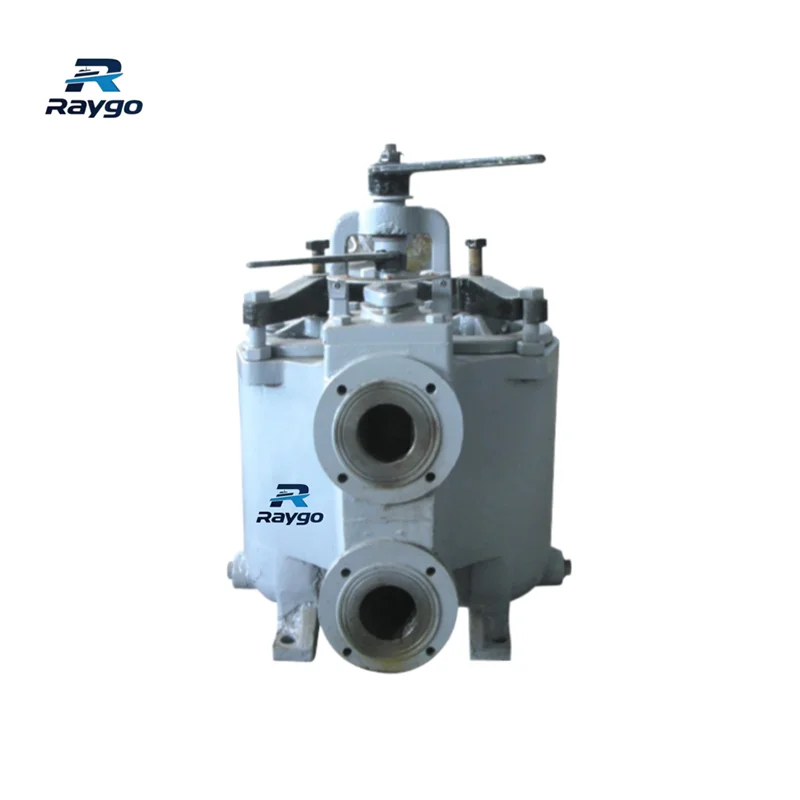
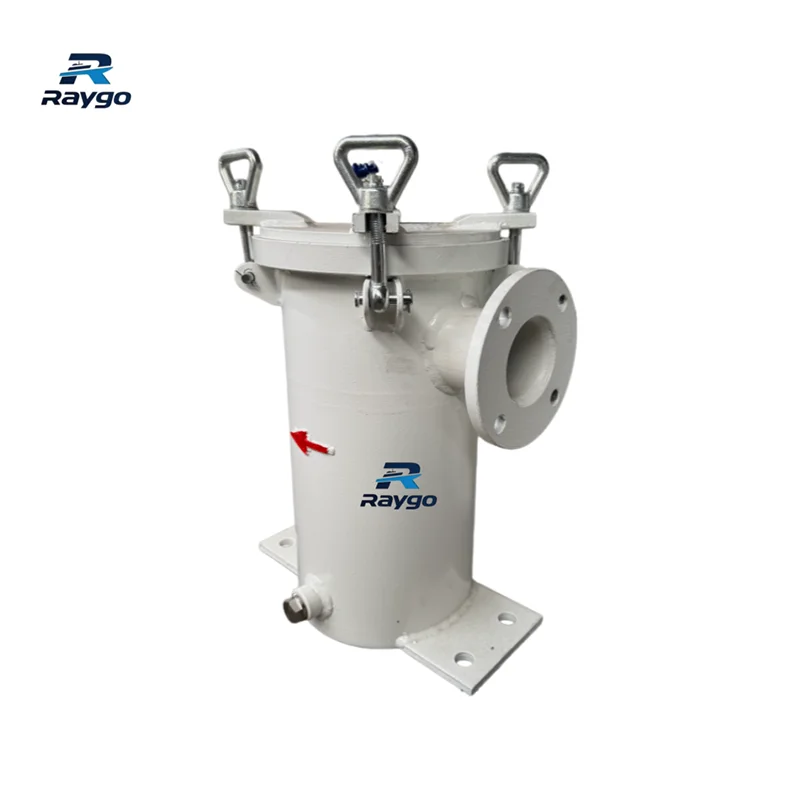
Simplex and duplex filters differ mainly in maintenance continuity. A simplex filter has one housing. The system may need to be stopped or isolated before cleaning or element replacement. A duplex filter has two housings and a changeover valve, allowing one side to remain in service while the other side is cleaned or prepared.
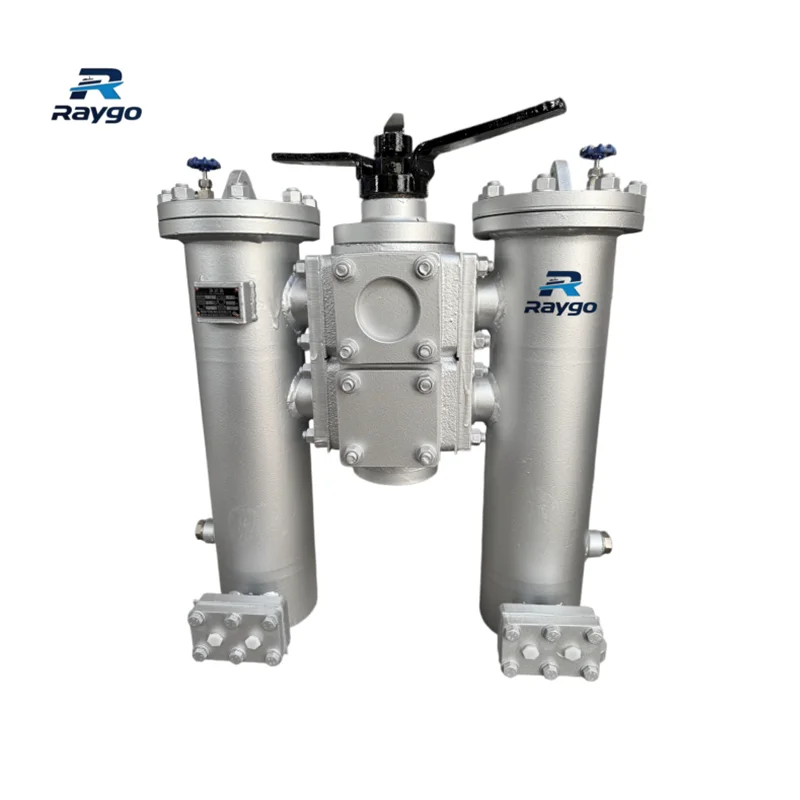
| Item | Simplex oil filter | Duplex oil filter |
| Structure | One filter housing. | Two filter housings with a changeover valve. |
| Maintenance | Usually requires system stop or isolation before service. | Can support changeover without stopping the system if the correct procedure is followed. |
| Typical use | Small equipment, standby equipment, intermittent oil circuits. | Main engine, auxiliary engine or other continuous oil circuits. |
| Key checks | DN size, element type, drain, vent, access space, pressure and filter rating. | Changeover valve, venting, pressure balance, differential pressure, drain and seal condition. |
Duplex Filter Changeover Procedure
Raygo confirmed that duplex filters can support changeover without stopping the system. The operation should be performed slowly and with attention to venting and pressure condition.
- Open the vent valve on the standby filter housing.
- Slowly operate the changeover valve from the running housing toward the standby housing.
- When oil flows continuously from the standby housing vent valve, close the vent valve.
- Complete the changeover and check inlet pressure, outlet pressure and differential pressure.
| Operation note: The actual procedure should follow the equipment manual and vessel operating rules. Air should not be introduced into the oil system during switching. |
Cleaning and Maintenance
Filter elements may be cleanable or replaceable depending on the element type and model. The maintenance interval should follow the equipment maker’s manual and actual operating condition. If a differential pressure alarm occurs, the filter should be handled immediately regardless of operating hours.
For metal or mesh elements, Raygo recommends soaking with diesel oil or a suitable solvent, using a soft brush along the texture to remove sludge and impurities, and avoiding excessive force that may deform the element. When needed, low-pressure compressed air can be used from inside to outside for drying.
For magnetic components, remove the component, wipe off iron or steel debris with a clean soft cloth, inspect for damage and reinstall it if it is still in good condition. Damaged magnetic components should be replaced.
Connection Standards
Connection standards should be confirmed according to the project and vessel piping system. Raygo confirmed that flange standards can include GB/T, CB/T, ISO, JIS, ASME, EN and BS. Common thread standards can include metric thread M, British thread G, British thread R/Rc and NPT.
The connection standard should be confirmed before production because flange drilling, gasket surface, thread type and installation direction affect replacement fit and sealing.
Certificate and Documentation Scope
Raygo confirmed that classification documentation can be provided when required, including product approval certificates and type approval certificates. The certificate scope, model, validity period and applicable product should be confirmed for each order.
It is better not to write that all marine filters automatically carry all class certificates. A more accurate statement is that certificates can be provided according to product type and project requirements.
Common Problems and Technical Checks
| Symptom | Possible causes | Technical checks |
| High differential pressure | Blocked element, cold oil, high viscosity, excessive flow or too fine a rating. | Check oil temperature, pressure gauge, element condition and actual flow. |
| Low oil pressure after filter | Severe blockage, valve position error, pump issue or incorrect element. | Compare inlet and outlet pressure, inspect the element and confirm valve position. |
| Frequent bypass opening | Incorrect bypass setting, undersized filter area, high viscosity or contaminated oil. | Check bypass setting, filtration rating, oil condition and operating temperature. |
| External leakage | Seal damage, loose cover, wrong gasket material, poor sealing surface or excessive pressure. | Isolate, depressurize and inspect sealing parts and cover condition. |
| Element deformation | Excessive differential pressure, incorrect element strength or incorrect installation. | Confirm element rating and installation direction. |
| Metal debris increases | Equipment wear or heavy ferrous particle generation. | Inspect magnetic component and perform oil analysis if required. |
Technical Data Required for Selection or Replacement
For a new selection or replacement project, the following information should be collected before confirming the model:
- Oil type: lubricating oil, hydraulic oil or fuel oil.
- Oil viscosity and operating temperature range.
- Normal flow rate and maximum flow rate.
- Working pressure, design pressure and test pressure requirement.
- Required filtration rating and element type.
- Bypass valve requirement and opening pressure, if required.
- Pressure gauge, differential pressure gauge, pressure switch or remote alarm requirement.
- Simplex or duplex configuration.
- DN size, flange standard, thread standard and pipe direction.
- Housing material and seal material requirement.
- Installation space, mounting base and maintenance access.
- Existing filter photo, drawing, nameplate or original part number for replacement.
- Classification certificate or inspection requirement.
Conclusion
A marine oil filter should be selected according to the actual oil system rather than by DN size alone. The key factors include oil type, viscosity, flow rate, working pressure, filtration rating, element type, bypass valve requirement, pressure indication, housing material, seal material, installation space and certificate scope.
Frequently Asked Questions
Can one oil filter be used for lubricating oil, hydraulic oil and fuel oil?
Some filter designs can be configured for more than one oil service, but the final selection must check oil type, viscosity, pressure, temperature, element material, seal material and filtration rating.
What is the difference between simplex and duplex oil filters?
A simplex filter has one housing and may require system stop or isolation during service. A duplex filter has two housings and can support changeover while the system keeps running, if operated correctly.
Is 25 micron filtration always suitable?
No. Raygo confirmed 25 micron as an absolute rating for its product information, but the required filtration rating still depends on the equipment maker’s specification and oil system condition.
Is the bypass valve standard?
No. Raygo confirmed that the bypass valve is not standard on every model. It should be selected according to the actual system and engine requirement.
Are pressure alarms standard?
No. Pressure gauges, differential pressure gauges, pressure switches and remote alarms can be configured when required.
How should a cleanable metal or mesh element be cleaned?
It can be soaked with diesel oil or a suitable solvent, brushed gently with a soft brush along the texture and dried with low-pressure compressed air from inside to outside if needed.
What certificates can be provided?
Product approval or type approval certificates can be provided according to project requirement. The certificate type, model scope and validity should be confirmed for each order.