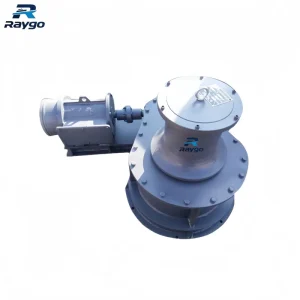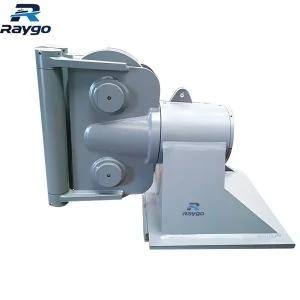
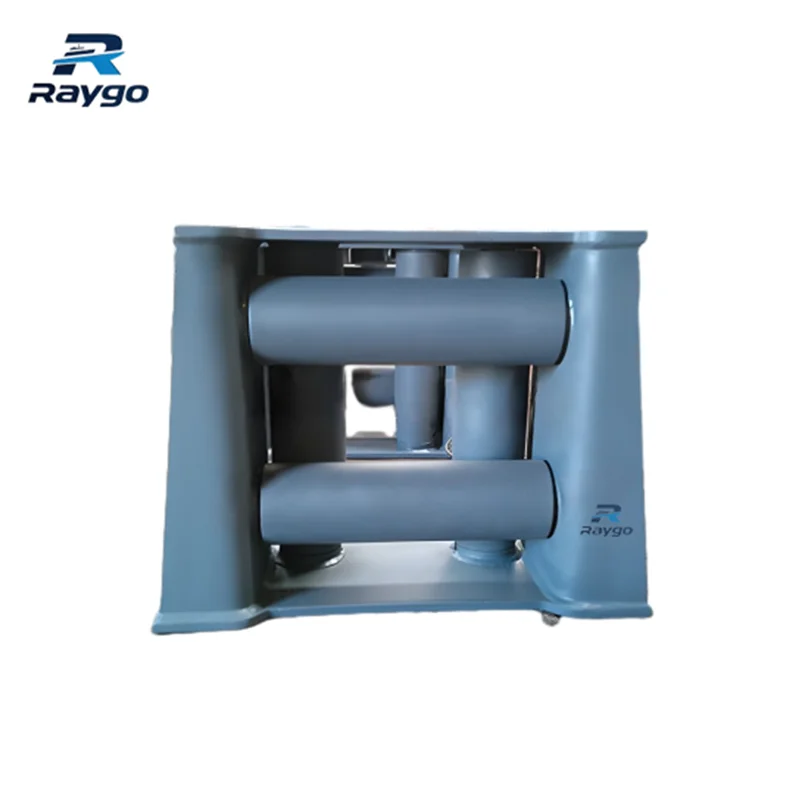

The Marine Fairlead with Horizontal Rollers is a deck-mounted rope guiding fitting used to guide, support, and protect ropes during marine mooring and deck rope handling operations.
It is commonly installed on the ship side, deck edge, bulwark area, or designated rope lead position where mooring ropes need to change direction. When the rope moves under tension, it contacts the roller surface and the roller rotates with the rope. This reduces friction between the rope and the guiding structure.
The pedestal structure provides stable support for deck installation, while the roller helps maintain a smoother rope path. Rope-retaining flanges, bearing systems, protective covers, and wear-resistant bushings can be added according to the operating environment and project requirements.
The Marine Fairlead with Horizontal Rollers are suitable for vessel berthing, ship side mooring, deck rope routing, tugboat operations, workboat handling, offshore service vessels, engineering vessels, and ship repair replacement projects.
Product Drawings:
The drawings below show several typical configurations of Horizontal Roller Fairleads, manufactured in accordance with CB/T 3062.
The product structure may include, depending on the specific drawing and model:
- Multiple vertical rollers
- Multiple horizontal rollers
- Side support frames
- Base structure
- Roller shafts and fixing components
Horizontal rollers are mainly used to support and guide the rope in the vertical direction, while vertical rollers provide lateral guidance. Depending on the configuration, different combinations of rollers help the rope pass through the fairlead smoothly and reduce direct contact and friction between the rope and the fairlead body.
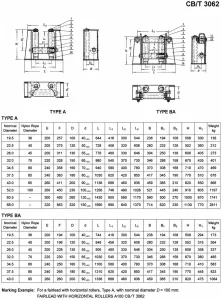
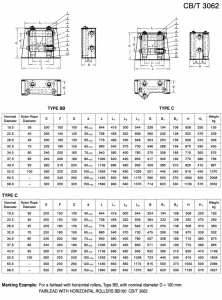
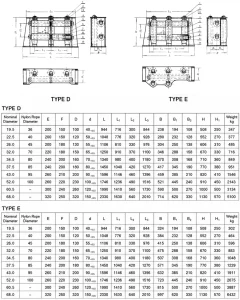
Drawing Dimension Description
| Symbol | English Description |
| Nominal Diameter | Nominal steel wire rope diameter |
| Nylon Rope Diameter | Suitable nylon rope diameter |
| D | Roller diameter, used for model marking |
| d | Shaft diameter with tolerance requirement |
| E | Inner vertical clearance |
| F | Roller effective height / rope contact height |
| L | Overall length |
| L1 | Main inner length |
| L2 | Lower roller span / inner support length |
| L3 | Upper opening length |
| B | Overall width |
| B1 | Base or top-view width |
| B2 | Inner width |
| H | Overall height |
| H1 | Inner effective height |
| Weight | Approximate unit weight |
For a fairlead with roller diameter D = 100 mm, the marking is:
Fairlead A100 CB/T 3062
Note: Final dimensions should be confirmed according to vessel structure, rope diameter, base arrangement, working load, and installation requirements.
Technical Specifications:
| Item | Specification |
| Product Name | The marine fairlead with horizontal rollers |
| Product Type | Deck-Mounted mooring roller / Rope guide roller |
| Installation Position | Deck / Ship side / Bulwark area / Customized |
| Roller Direction | Vertical / Horizontal / Customized |
| Roller Quantity | Single roller / Multiple rollers / Customized |
| Structure Type | Open type / Protected type / Customized |
| Material | Cast steel / Stainless steel / Customized |
| Bearing Type | Self-Lubricating bearing / Grease lubrication / Customized |
| Surface Treatment | Marine paint / Galvanized / Anti-Corrosion coating / Customized |
| Suitable Rope | Steel wire rope / Synthetic rope / Nylon rope / Mooring rope |
| Application | Mooring, Towing line guidance, Deck rope handling |
| Customization | Available according to drawing or project requirements |
| Certificate | Available upon request |
Technical specifications can be supplied according to roller diameter, roller height, rope diameter, base dimensions, mounting hole position, installation method, surface treatment, and project drawing requirements.
Recommended Design Parameters
| Parameter | Description |
| Roller Diameter | Outer diameter of the roller |
| Roller Height | Effective rope contact height |
| Base Plate Size | Length, width, and thickness of pedestal base |
| Mounting Hole Position | Hole diameter, spacing, and quantity |
| Rope Diameter | Diameter of mooring rope, towing rope, or working rope |
| Rope Lead Angle | Expected rope entering and exiting direction |
| Working Load | Required load capacity or project load requirement |
| Installation Position | Deck, ship side, bulwark, or other rope guide area |
| Material Requirement | Cast steel, stainless steel, or customized material |
| Bearing Requirement | Self-lubricating bearing, grease lubrication, or customized |
| Surface Treatment | Marine paint, galvanizing, or anti-corrosion coating |
| Drawing Requirement | Manufacturing according to drawing, sample, or old equipment dimensions |
Key Features:
- Friction-Reducing Roller Design: The roller rotates with the rope during operation, reducing sliding friction between the rope and the deck guiding structure. This helps protect mooring ropes from excessive wear and improves rope handling efficiency.
- Deck-Mounted Pedestal Structure: The pedestal base provides stable support for deck installation. It can be designed according to vessel layout, deck foundation, rope direction, and load requirements.
- Smooth Rope Direction Change: The roller guides the rope through a controlled path and supports smooth rope direction change during mooring, towing, berthing, and deck rope handling operations.
- Rope-Retaining Flange Design: Upper and lower flanges can help keep the rope within the roller guiding area and reduce the risk of rope slip-off during dynamic rope movement.
- Bearing-Supported Operation: Self-lubricating bearings or grease lubrication structures can be used to improve roller rotation smoothness and reduce maintenance frequency.
- Suitable for Multiple Rope Types: The Marine Fairlead with Horizontal Rollers can be used with steel wire ropes, nylon ropes, synthetic mooring ropes, towing lines, and deck working ropes according to vessel requirements.
- Marine-Grade Anti-Corrosion Protection: Surface treatment such as marine paint, galvanizing, or anti-corrosion coating helps improve durability in seawater, salt spray, and open deck environments.
- Custom Drawing Support: Raygo Marine supplies roller fairleads conforming to CB/T 3062 standard dimensions. We also offer customized solutions based on project drawings, replacement samples, or specific customer requirements.
Working Principle:
When the rope enters the guiding area, it contacts the roller surface. As the rope moves under tension, the roller rotates with the rope. This rolling contact reduces sliding friction and helps make rope movement smoother.
The pedestal base transfers the operating force to the deck foundation, while the roller supports rope movement and direction change. Rope-retaining flanges help limit rope movement and keep the rope within the guide area.
This design provides a smoother and safer rope path from deck equipment to the ship side, quay, shore bollard, towing point, mooring point, or offshore working position.
Main Components:
| Component | Description |
| Roller | The main rope-guiding component. It rotates with the rope to reduce friction and protect the rope surface. |
| Pedestal Base | Supports the roller assembly and secures the unit to the deck or ship structure. |
| Central Shaft | Supports roller rotation and transfers load from the roller to the pedestal structure. |
| Bearing / Lubrication Structure | Helps reduce roller rotation resistance and improves operating smoothness. |
| Upper Rope-Retaining Flange | Helps prevent the rope from jumping out of the roller during operation. |
| Lower Rope-Retaining Flange | Keeps the rope within the guided position and supports safe rope movement. |
| Protective Cover | Optional protection against impact, seawater exposure, and external damage. |
| Wear-Resistant Bushing | Optional component used to reduce wear between moving parts and improve service life. |
| Mounting Holes | Used for fixing the pedestal roller to the deck, foundation, or ship structure. |
| Protective Coating | Provides corrosion protection for marine deck environments. |
The roller, pedestal base, central shaft, bearing system, and rope-retaining structure work together to guide the rope, reduce wear, and improve deck operation safety.
Applications:
The Marine Fairlead with Horizontal Rollers are widely used in shipboard mooring and rope handling systems where ropes need to be guided smoothly, protected from excessive wear, and kept in a stable working path.
- Vessel Berthing and Mooring Operations: During berthing or mooring, ropes are led from deck equipment to shore bollards or quay fittings. The Marine Pedestal Roller guides the rope along a controlled path and reduces direct rubbing between the rope and ship structure.
- Ship Side Mooring Rope Guidance: The Marine Fairlead with Horizontal Rollers can be installed on the ship side, deck edge, or bulwark area to guide main mooring ropes. They are especially useful when rope angles change significantly during port operations.
- Deck Rope Routing: On deck, ropes may need to pass between winches, bollards, fairleads, and working positions. Pedestal rollers help organize rope routing and reduce interference with other deck equipment.
- Multi-Level Deck Rope Transition: Pedestal rollers can be used between upper and lower deck levels to help ropes pass smoothly from one deck area to another, reducing friction, rope jamming, and surface damage.
- Tugboat and Towing Line Guidance: Tugboats and towing vessels often operate with changing rope angles and frequent rope movement. A Marine Pedestal Roller helps guide towing or assisting lines smoothly and reduces rope abrasion caused by sharp direction changes.
- Workboats and Engineering Vessel Deck Operations: On workboats, dredgers, crane barges, and engineering vessels, deck ropes are often used for positioning, assisting, pulling, or temporary mooring. Pedestal rollers help improve rope handling and protect ropes during repeated operation.
- Lifeboat and Workboat Rope Handling: The Marine Fairlead with Horizontal Rollers can be used to guide ropes involved in lifeboat or workboat launching and recovery systems, helping support smoother and safer rope movement.
- Offshore Vessels and Special Marine Operations: Offshore service vessels, drilling vessels, oil platforms, and marine engineering equipment often require stable rope guidance under wind, wave, and vessel motion. Pedestal rollers help maintain a controlled rope path in complex operating conditions.
- Ship Repair and Replacement Projects: For ship repair projects, The Marine Fairlead with Horizontal Rollers can be supplied according to existing drawings, old samples, photos, or installation dimensions. They are suitable for replacing worn, corroded, or damaged rope guiding rollers.
Installation & Maintenance:
Proper installation and regular maintenance are important for safe rope guidance and long-term operation of the Marine Pedestal Roller. The roller should be installed in a position where it can guide the rope smoothly and keep the rope path aligned with the deck layout, bollard, winch, fairlead, towing point, or shore connection point.
Installation Notes
- Install the pedestal roller on a reinforced deck, ship side, bulwark, or foundation structure.
- Confirm the rope lead direction before positioning the pedestal roller.
- Keep the roller centerline aligned with the expected rope path.
- Make sure the rope can pass over the roller smoothly without sharp bending.
- Confirm that the base plate matches the deck foundation and mounting hole arrangement.
- Weld or bolt the base according to the vessel structural drawing.
- Ensure the base is firmly fixed to withstand mooring loads and dynamic rope movement.
- Leave enough space around the roller for rope movement, inspection, and maintenance.
- After installation, check whether the roller rotates smoothly.
- Repair any coating damage caused during installation.
Maintenance Notes
- Lubricate the roller or bearing regularly.
- Check whether the roller rotates smoothly.
- Remove salt, dirt, and foreign objects from the shaft area.Inspect bearings for wear, corrosion, looseness, or abnormal noise.
- Check the roller surface for cracks, deformation, sharp edges, or excessive wear.
- Inspect rope-retaining flanges for damage or deformation.
- Check pedestal base, mounting bolts, and deck connection condition.
- Repair damaged coating to prevent corrosion.
- Replace worn bearings, bushings, rollers, or fasteners in time.
Maintenance Checklist
| Inspection Item | What to Check | Recommended Action |
| Roller Rotation | Whether the roller rotates smoothly | Lubricate or inspect bearing |
| Bearing Condition | Wear, Corrosion, noise, or looseness | Replace bearing if required |
| Shaft Area | Dirt, Salt deposits, or foreign objects | Clean regularly |
| Roller Surface | Wear, Cracks, Deformation, or sharp edges | Repair or replace roller |
| Rope-Retaining Flange | Damage or deformation | Repair or replace damaged part |
| Pedestal Base | Cracks, corrosion, or deformation | Inspect and repair |
| Mounting Bolts | Looseness or corrosion | Tighten or replace |
| Surface Coating | Paint damage or corrosion | Repaint or apply protection |
| Rope Contact Area | Excessive wear or rough surface | Polish, Repair, or replace |
| Lubrication Point | Lack of grease or lubrication failure | Add grease or maintain bearing |
Custom Options Available:
Raygo Marine can supply customized The Marine Fairlead with Horizontal Rollers according to vessel type, rope specification, deck layout, operating load, and project drawings.
For accurate quotation, customers can provide the rope diameter, roller diameter, roller height, base dimensions, mounting hole position, surface treatment, installation drawing, and project requirements.
- Roller diameter
- Roller height
- Roller width
- Base plate size
- Base plate thickness
- Mounting hole diameter
- Mounting hole spacing
- Roller direction
- Roller quantity
- Rope diameter
- Rope lead angle
- Working load
- Material
- Bearing type
- Surface treatment
- Protective cover
- Wear-resistant bushing
- Drawing-based production
- Replacement according to old sample or photos
- Inspection document or certificate requirement
Information Needed for Quotation
| Required Information | Purpose |
| Product Drawing | Confirms dimensions and structure |
| Installation Position | Determines base and roller direction |
| Rope Diameter | Helps select roller size |
| Rope Lead Angle | Helps design guiding direction |
| Working Load | Helps confirm structural strength |
| Base Plate Dimensions | Ensures correct deck installation |
| Mounting Hole Details | Ensures compatibility with foundation |
| Material Requirement | Confirms durability and corrosion resistance |
| Surface Treatment | Confirms marine environment protection |
| Photos of Old Roller | Useful for replacement projects |
| Quantity | Used for quotation and production planning |
FAQ :