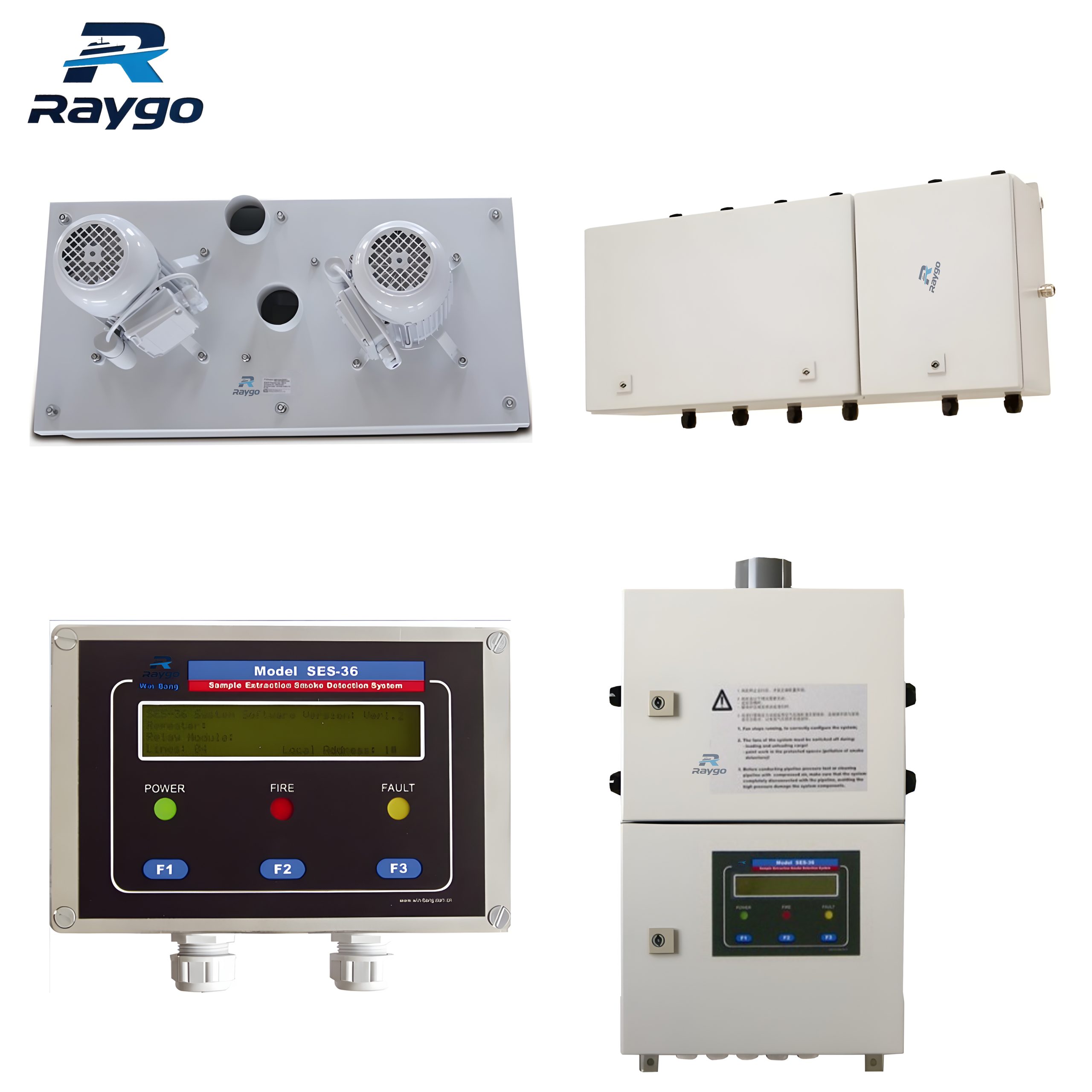

Marine Sample Extraction Smoke Detection System | For Cargo Holds

A system for early-warning smoke detection in cargo holds. It uses redundant fans to continuously draw airsamples to a central detection unit. An intelligent controller analyzes smoke levels, provides alarms, and automatically adjusts for sensor cleanliness to prevent false alarms.

Accreditation and Certificates:

Approved-logo3-1
Overview
Our system’s fan unit continuously draws air samples from protected cargo holds through a pipe network.Each air sample passes through a dust filter before entering a detection box. Inside the detection box, an independent smoke sensor analyzes the air from each specific hold. Each sensor sends its analysis results to the main controller. Should smoke concentration exceed a preset alarm level, the controller will activate audible and visual alarms with detailed text messages.
Technical Specifications:
No. Equipment Name Model Operating Voltage IP Rating Explosion Proof Rating
1 Controller SES-CP 2×220/230VAC 50/60Hz; or 2×110/115VAC 50/60Hz IP56 –
2 Detector Box(Optional / Customizable) SES-DB4 – IP56 EEx ia IIC T5
SES-DB8 – IP56 EEx ia IIC T5
SES-DB12 – IP56 EEx ia IIC T5
SES-DB16 – IP56 EEx ia IIC T5
3 Repeater SES-RP 24VDC IP56 –
4 Relay Box SES-RB 24VDC IP56 –
5 Fan Unit SES-FU220 2×220/230VAC 50/60Hz IP54 –
SES-FU110 2×110/115VAC 50/60Hz IP54 –

Typical Configuration Example of the 12-Channel SES-36 Cargo Smoke Detection System

Typical Configuration Example of the 12-Channel SES-36 Cargo Smoke Detection System
  • All alarms are accompanied by both audible and visual signals, and detailed text information is displayed on the LCD.
  • The system has two power input lines. If one fails, it will automatically and seamlessly switch to the other.
  • Automatic monitoring of airflow changes.
  • Automatic monitoring and control of fan operation.
  • The system can automatically detect the cleanliness level of each smoke detector and adjust the corresponding parameters accordingly, ensuring that the relative alarm threshold remains consistent and preventing false alarms. The system will automatically prompt the cleanliness status of the detector.
  • All alarm information is transmitted to the VDR in NMEA0183 format.
Key Component Parameters:

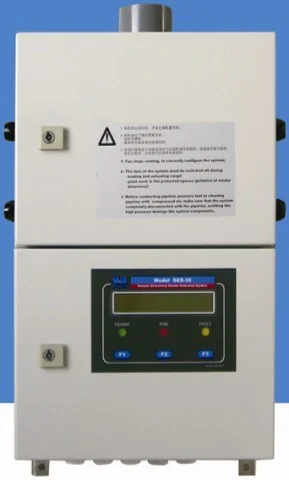
Model: SES-CP

The SES-CP Controller supplies the 24V DC power for the entire system, controls fan operation, monitors system faults, analyzes smoke concentration, and displays results. It is the core part of the system.

The controller provides the following external terminals:

  • Main power supply: 220/230V 50/60Hz or 110V 60Hz
  • Backup power supply: 220/230V 50/60Hz or 110V 60Hz
  • Fan Unit 1 connection
  • Fan Unit 2 connection
  • CAN bus (for repeater, relay, etc.)
  • VDR interface (RS-485 bus, NMEA 0183 format)
  • 2 groups of fire alarm outputs (passive relay contacts)
  • 1 group of fault alarm output (passive relay contacts)
  • 1 group of general alarm output (passive relay contacts, 2-minute delay)
  • External sounder interface (DC24V/30mA)
SES-CP Controller

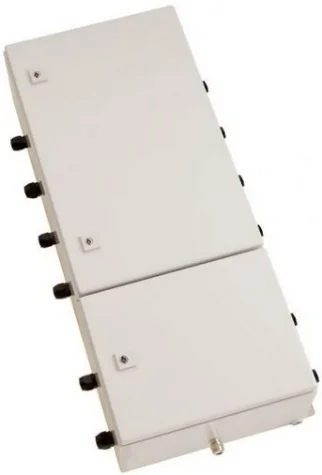
Model: SES-DB12

The SES-DB12 Detector Box integrates 9 to 12 detection channels.

Each channel is equipped with an independent smoke sensor and airflow variation detector.

The connection between the detector box and the controller uses a 2-core cable.

SES-DB12 Detector Box

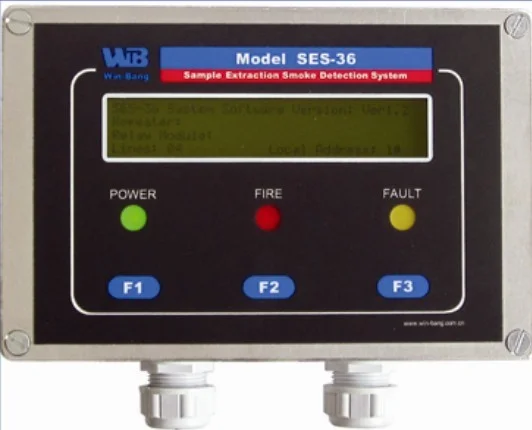
Model: SES-RP

The repeater can be installed anywhere on the vessel, either embedded or wall-mounted, to display fire alarms and fault alarms.

Like the controller, the repeater provides audible and visual alarms for fire and fault signals.

If the repeater address is set to “2,” it can also operate the system (same functions as the controller, such as acknowledging alarms from the controller or other repeaters).

The connection between repeater and controller uses a CAN bus. Each system can connect up to 5 repeaters.

SES-RP Repeater

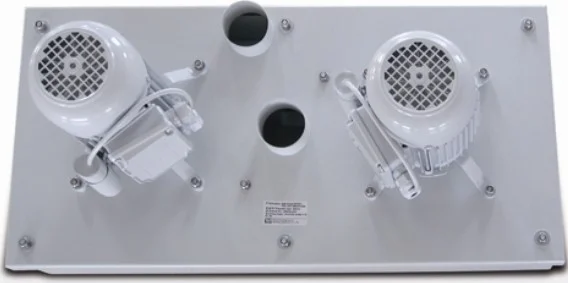
The Fan Unit is available in two models: SES-FU220 (220VAC) and SES-FU110 (110VAC).

Each fan unit integrates two independent fans, with only one fan operating at a time. The controller automatically switches between the two fans every 24 hours.

If one fan fails, the other fan will automatically start, and the system will display the relevant fault information.

SES Fan Unit
Key Features:
 
  • Redundant Design for High Reliability: Features dual power supply inputs and dual fan units. The system automatically switches to the backup power supply or backup fan in case of a failure.
  • Intelligent False Alarm Prevention: Our controller automatically monitors the cleanliness value of each smokesensor. It adjusts system parameters based on this value to maintain a consistent alarm threshold and prevent false alarms.
  • Automated System Monitoring: Includes self-diagnostic functions for the entire system. It automatically monitors airflow from each line and controls the fan operation. Any system fault generates a specific alarm.
  • Clear Alarm & Data Output: All alarms are both audible and visual, with detailed text messages on the LCD screen. Alarm information is sent to the VDR in NMEA0183 format.

Applications:

  • General Cargo Holds: Provides continuous smoke monitoring for holds carrying dry cargo, paper, or timber.
  • Bulk Carrier Holds: Offers early-warning fire detection for holds containing bulk commodities like grain, coal, or ore.
  • Container Ship Holds: Monitors the enclosed spaces within container holds for signs of combustion.

Installation & Maintenance:

Installation: The system consists of a controller, detection boxes, a fan unit, and a pipe network. All components are installed according to the ship’s fire protection arrangement drawings. The detection box connects to the controller via a 2-core cable.
Maintenance: Routine maintenance includes checking the pre-filters and cleaning them as required by cargo type. The system’s self-diagnostic function will generate a fault alarm if a smoke sensor requires professional cleaning or replacement.

Custom Options Available:

Need something specific?

Detection boxes are available in configurations for 4, 8, 12, or 16 lines. This allows the system to match the number of protected cargo holds on your vessel. Repeater panels for remote monitoring can be added to the system.

FAQ :

Q: What happens if one fan fails?

A: The controller will automatically detect the failure, start the second fan, and generate a specific fault alarm on the display.

Q: How does the system avoid false alarms from dust?

A: First, a dust filter cleans the air sample before it reaches the sensors. Second, the controller intelligently monitors each sensor’s cleanliness level and adjusts its sensitivity to maintain a stable alarm point.

Q: Can I monitor the system from the bridge?

A: Yes. You can install up to five remote Repeater Panels (SES-RP) anywhere on the vessel. These panels display all fire and fault alarms and can be configured to operate the system.

Contact Us Now

If you would like to have a question then get in touch today, we are ready to assist 24/7.

We welcome your cooperation and we will develop with you.

Scroll to Top
Request A Quote

Fill in the form below and our team will be happy to assist you

Request A Quote

Fill in the form below and our team will be happy to assist you

Request A Quote

Fill in the form below and our team will be happy to assist you

Catalog Download