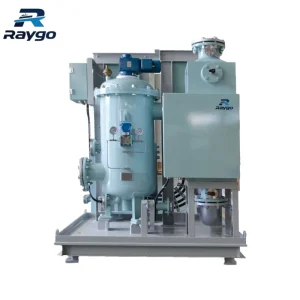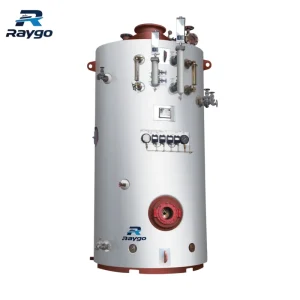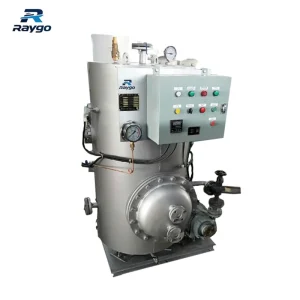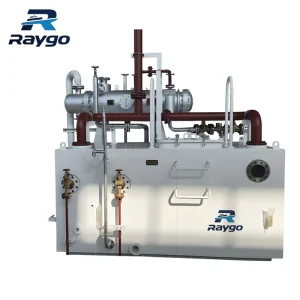
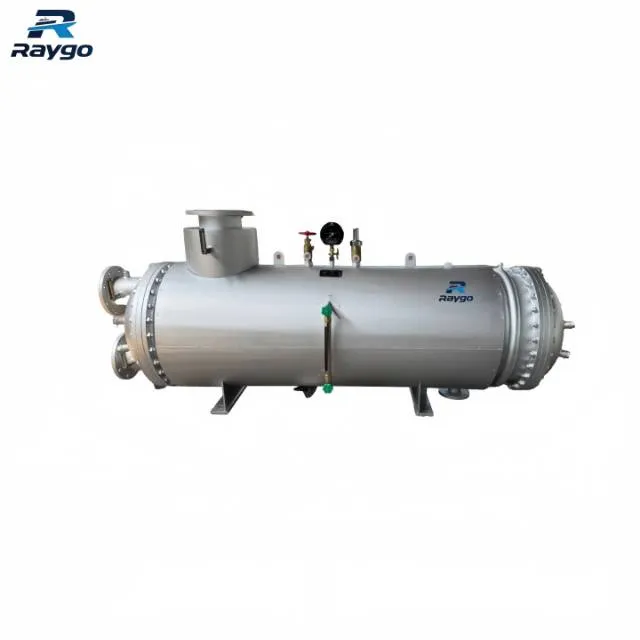
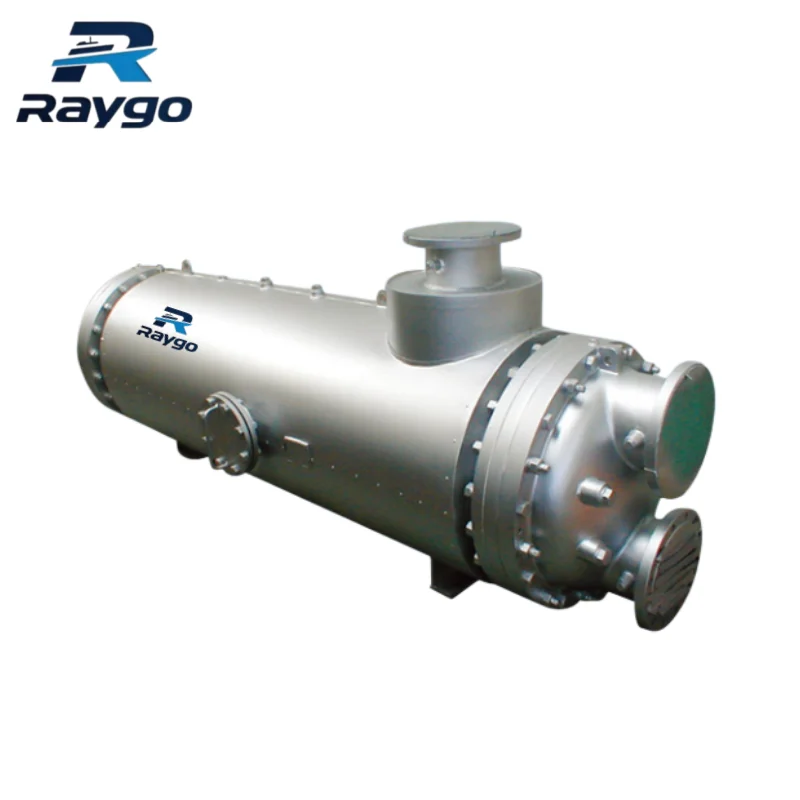
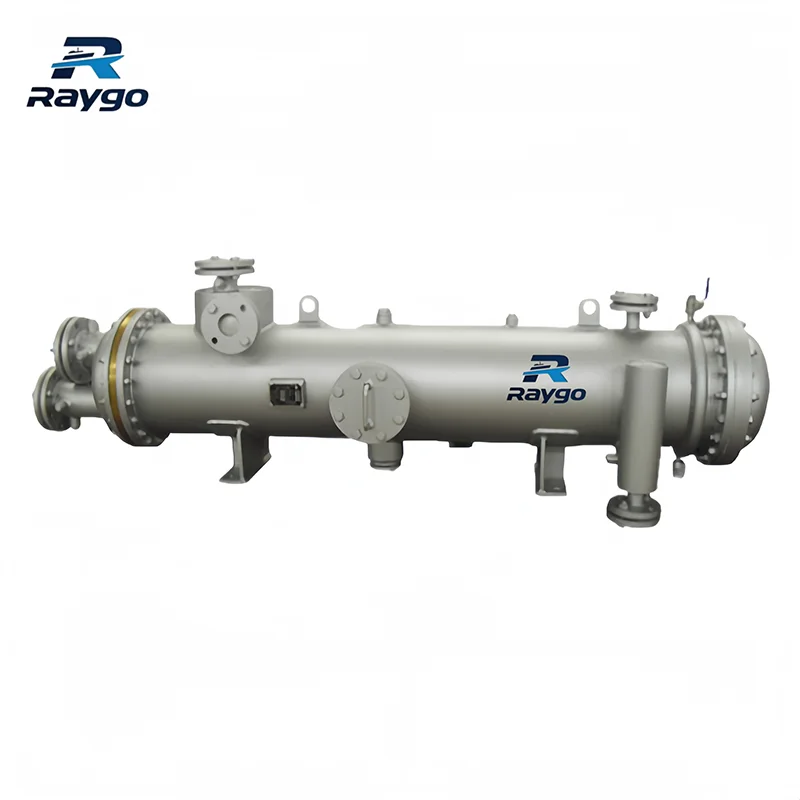

A marine shell and tube heat exchanger is a standard heat exchange device used in shipboard auxiliary systems. It is also known as a tubular heat exchanger.
The structure is simple, strong, and adaptable. It consists of a shell, tube bundle, tube sheets, baffles, and end covers. The tube bundle is fixed to the tube sheets and enclosed by the shell and covers, creating two independent spaces.
The fluid flowing inside the tubes is called the tube-side medium. The fluid flowing outside the tube bundle and inside the shell is called the shell-side medium. Heat passes through the tube walls, while the two fluids remain separated.
In marine applications, shell and tube heat exchangers are used for cooling, heating, condensation, and heat recovery. They are suitable for harsh engine room environments where reliability, maintainability, and material selection are important.
Technical Specifications:
| Item | Specification |
| Product Name | Marine Shell and Tube Heat Exchanger |
| Type | Shell and Tube / Tubular Heat Exchanger |
| Heat Exchange Area | 0.5m² to 500m², or customized according to project requirements |
| Tube Type | Smooth Tube / Finned Tube / Straight Tube / U-Bend Tube / Coil Tube / Customized |
| Material Options | Copper-Nickel Alloy / Stainless Steel / Titanium / Carbon Steel / Copper |
| Medium | Lube Oil, Fuel Oil, Fresh Water, Seawater, Steam, Condensate |
| Function | Cooling, Heating, Condensing, Heat Recovery |
| Installation | Horizontal / Vertical / Customized |
| Certificate | Available upon request |
Note: The final design depends on heat duty, medium type, working pressure, working temperature, flow rate, installation space, and material requirements.
Key Features:
- Robust Structure for Marine Conditions: Marine systems often operate under vibration, temperature changes, pressure changes, and continuous-duty conditions. A shell and tube heat exchanger has a strong mechanical structure, making it suitable for ship engine rooms and marine auxiliary equipment.
- Suitable for Different Marine Media: The heat exchanger can handle many shipboard media, including lube oil, fuel oil, fresh water, seawater, steam, and condensate. It can be used as a cooler, heater, condenser, or heat recovery unit according to the vessel system.
- Easy Cleaning and Maintenance: The structure is practical for marine maintenance. The end cover can be opened for inspection, and the tube bundle can be cleaned when scaling, fouling, or deposits reduce heat transfer efficiency.
- Efficient Heat Transfer: The tube bundle provides the main heat transfer surface. Baffles guide the shell-side fluid across the tube bundle, increasing turbulence and improving heat exchange performance.
- Flexible Material Options: Different materials can be selected according to the medium and working environment. Copper-nickel alloy and titanium are commonly considered for seawater service, while stainless steel, carbon steel, and copper can be selected for other marine applications.
- Custom Design for Shipboard Systems: Raygo Marine can support customized designs based on heat exchange area, medium type, installation space, flow arrangement, nozzle position, pressure rating, temperature rating, and customer drawings.
Working Principle:
A marine shell and tube heat exchanger works by transferring heat between two fluids through the walls of the heat exchange tubes.
- Tube Side
One fluid flows inside the heat exchange tubes. This side is called the tube side. Depending on the application, the tube-side medium can be oil, water, steam, condensate, or another shipboard fluid. - Shell Side
The second fluid flows inside the shell and around the outside surface of the tube bundle. This side is called the shell side. - Heat Transfer Through Tube Walls
The two fluids do not mix. Heat transfers through the tube walls. A hotter medium releases heat, while a cooler medium absorbs heat. - Baffles for Better Heat Exchange
Baffles are installed inside the shell. They force the shell-side fluid to flow across the tube bundle instead of moving directly along the shell. This increases turbulence, improves contact with the tube surface, and helps raise the heat transfer rate. - Multi-Pass Flow Design
The end cover can include internal partition plates. These plates divide the tube side into multiple passes, allowing the fluid to stay inside the exchanger longer and improving heat exchange efficiency.
Main Components:
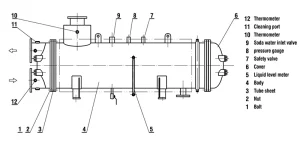
| Component | Function |
| Shell / Body | Holds the tube bundle and provides flow space for the shell-side medium |
| Tube Bundle | Main heat transfer part, Made of multiple heat exchange tubes |
| Tube Sheet | Fixes the tubes and separates the tube side from the shell side |
| Baffles | Guide shell-side flow across the tube bundle, Improve turbulence, and support the tubes |
| End Cover | Forms the tube-side chamber and can divide the tube side into multiple passes |
| Safety Valve | Helps protect the equipment under abnormal pressure conditions |
| Pressure Gauge | Monitors operating pressure |
| Thermometer | Monitors operating temperature |
| Cleaning Port | Supports inspection, Cleaning, and maintenance |
| Liquid Level Meter | Used for systems where level monitoring is required |
| Bolts and Nuts | Used for connection, Sealing, and maintenance disassembly |
Available Options:
Material selection is important for marine heat exchangers because different media have different corrosion, temperature, and pressure requirements.
| Type | Shell and Tube |
| Area Range | 0.5m² – 500m² |
| Tube Types | Smooth, Finned, Straight, U-bend, Coil |
| Material | All Copper, Stainless Steel, Titanium, Carbon Steel |
| Certification | CCS, ABS, LR, DNV, BV, NK, RINA |
For seawater service, corrosion resistance should be considered carefully. For oil and steam systems, temperature, pressure, and cleanliness requirements should also be checked before material selection.
Applications:
Marine shell and tube heat exchangers are used in many vessel systems. They can serve as coolers, heaters, condensers, and heat recovery units.
- Atmospheric Condenser: An atmospheric condenser is used to recover condensate from auxiliary steam. It can also handle exhaust steam or condensate related to fuel oil heating, lube oil heating, domestic water heating, and excess steam from exhaust gas boilers.
- Lube Oil Cooler: A lube oil cooler transfers heat from high-temperature lubricating oil to a cooling medium. This helps maintain proper oil temperature and viscosity, supporting safe and reliable operation of engines and auxiliary equipment.
- Tank Washing Water Heater: A tank washing water heater is used on oil tankers to provide high-temperature water for cleaning cargo oil tanks. Stable heating performance helps support tank cleaning efficiency.
- Jacket Water Heater: A jacket water heater is used to preheat diesel engines before start-up. Proper preheating helps improve starting reliability and supports stable engine operation.
- Fuel Oil Heater: A fuel oil heater raises fuel oil to the required temperature and viscosity. This helps improve fuel transfer, atomization, and combustion performance.
- Lube Oil Heater: A lube oil heater brings lubricating oil to the required temperature before it enters equipment. This supports lubrication performance and reduces start-up risks in marine machinery.
- Seawater and Fresh Water Heating: Shell and tube heat exchangers can also be used for seawater or fresh water heating in shipboard systems, depending on the vessel application and material selection.
- Steam Condensation and Heat Recovery: The exchanger can be used for steam condensation and heat recovery in marine auxiliary systems, helping recover useful heat and improve system efficiency.
Installation & Maintenance:
Correct installation and operation help improve heat exchange performance and extend service life.
Recommended installation and operation points:
- Confirm inlet and outlet direction before installation.
- Follow the designed tube-side and shell-side flow arrangement.
- Make sure flange connections and sealing surfaces are properly aligned.
- Install pressure gauges, thermometers, and safety valves according to system requirements.
- Keep enough maintenance space for end cover removal and tube bundle cleaning.
- Make sure operating pressure and temperature stay within the design range.
- Check whether the selected material is suitable for the medium, especially for seawater service.
- Clean the system before operation to reduce blockage and fouling risks.
- Monitor pressure and temperature during operation.
- Stop operation and inspect the exchanger if abnormal pressure, leakage, or sharp performance drop occurs.
Regular maintenance helps keep stable heat transfer performance and reduce failure risk. Tube bundle fouling, corrosion, gasket aging, and loose fasteners are common issues in long-term operation.
| Problem | Possible Cause | Solution |
| Lower heat transfer efficiency | Scaling, fouling, or deposits on the tube bundle | Clean the tube bundle regularly |
| Leakage | Corrosion or vibration wear at the tube-to-tube sheet connection | Repair welding, replace the tube bundle, or add tube sheet protection |
| Poor flange sealing | Aged gasket or loose bolts | Tighten bolts or replace the gasket |
| Abnormal pressure | Blockage, Valve issue, or incorrect operation | Check the pressure gauge, Safety valve, and flow path |
| Corrosion | Material not suitable for the medium | Select copper-nickel alloy, Titanium, or another suitable corrosion-resistant material |
| Unstable temperature control | Incorrect flow direction, Fouling, or insufficient flow rate | Check flow direction, Clean the exchanger, and verify system flow |
Maintenance Recommendations:
- Inspect the tube bundle regularly.
- Clean scaling and deposits before they reduce heat transfer efficiency.
- Check flange gaskets and fastening bolts.
- Inspect tube sheet areas for leakage, corrosion, or vibration wear.
- Check pressure gauges, thermometers, and safety valves during operation.
- Use suitable cleaning methods according to tube material and fouling type.
Custom Options Available:
Raygo Marine can provide customized shell and tube heat exchangers according to vessel system requirements, drawings, replacement needs, and operating conditions.
- Heat exchange area
- Tube type
- Tube material
- Shell material
- Tube sheet material
- Flow arrangement
- Nozzle position
- Flange standard
- Horizontal or vertical installation
- Cleaning port design
- Pressure rating
- Temperature rating
- Drawing-based replacement
- Inspection and certificate requirements
FAQ :
Q1: What is a marine shell and tube heat exchanger used for?
A1: A marine shell and tube heat exchanger is used for cooling, heating, condensing, and heat recovery in shipboard systems. Common applications include lube oil cooling, fuel oil heating, jacket water heating, steam condensation, and seawater or fresh water heating.
Q2: Is this heat exchanger suitable for seawater?
A2: Yes. It can be designed for seawater service when suitable corrosion-resistant materials are selected. Copper-nickel alloy and titanium are commonly considered for seawater-related applications.
Q3: What materials are available for seawater applications?
A3: Copper-nickel alloy and titanium are common choices for seawater service. The final material should be selected according to seawater conditions, temperature, pressure, chloride content, and project requirements.
Q4: What is the difference between tube side and shell side?
A4: The tube side refers to the fluid flowing inside the heat exchange tubes. The shell side refers to the fluid flowing outside the tube bundle and inside the shell. Heat transfers through the tube walls, while the two fluids remain separated.
Q5: Can the heat exchange area be customized?
A5: Yes. The heat exchange area can be customized according to heat duty, medium type, flow rate, working temperature, working pressure, and installation space.