
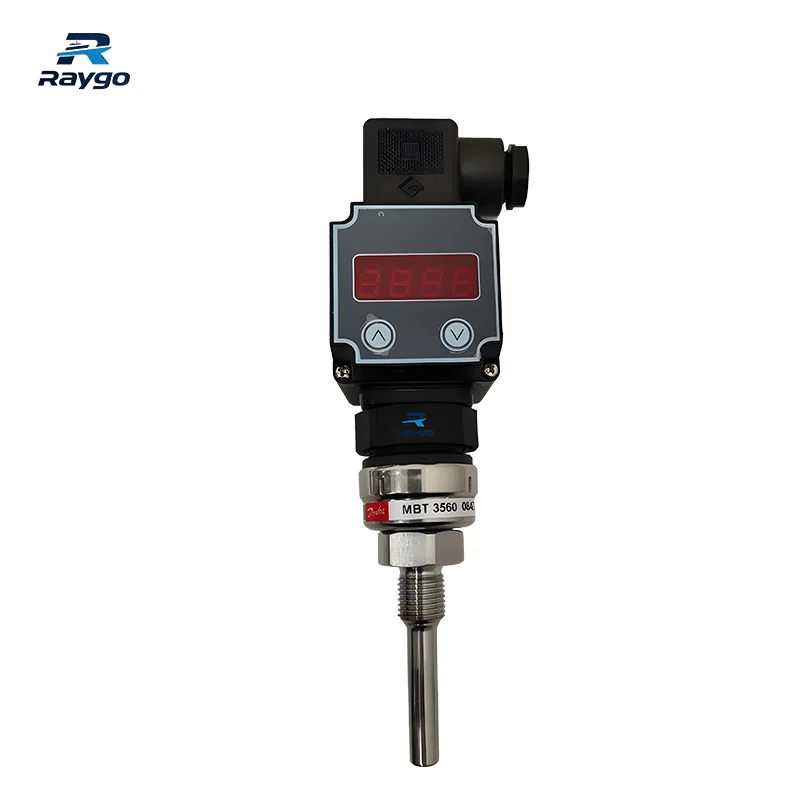
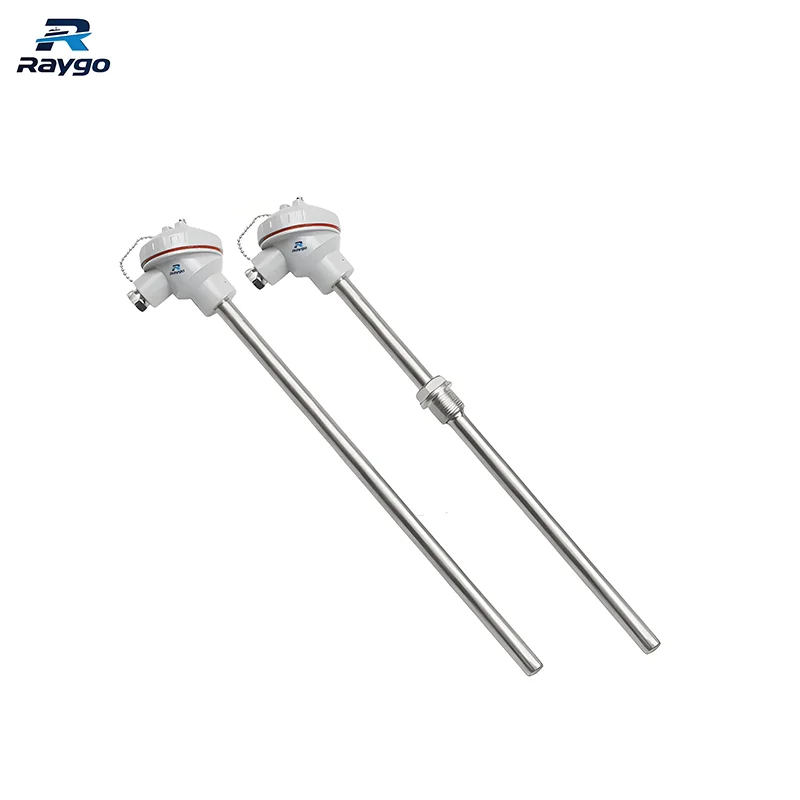
Marine Temperature Transmitter (WZPK) | Platinum Resistance (RTD)
A temperature transmitter for liquids, gases, or steam on ships. It uses a platinum resistance element (RTD) for accurate measurement (±0.5% FS). The unit can provide either a direct resistance or a standard 4-20mA output signal.
Accreditation and Certificates:

Technical Specifications:
| Parameter | Specification |
| Model | WZPK |
| Power Supply | DC 24V ±10% |
| Accuracy | ±0.5% FS |
| Operating Temperature |
-20°C to 60°C (Transmitter Head) |
| Output Signal | Resistance Value (2/3-wire) or DC 4-20mA |
| Sensor Type | Platinum Resistance (Pt100, Pt1000) |
Key Features:
- Platinum Resistance Sensor (RTD): Utilizes a high-quality platinum resistance element for accurate and stable temperature measurement.
- Flexible Signal Output: You can choose a model with a standard 4-20mA output or a model with a direct 2 or 3-wire resistance output.
- Wide Medium Compatibility: The probe design is suitable for measuring the temperature of liquids, gases, or steam.
- Designed for Long Service Life: The robust probe and housing construction are designed for the marine environment.
Applications:
- Engine Cooling Water: Monitors temperature in jacket water and sea water cooling circuits.
- Lube Oil Systems: Measures oil temperature for main engines, generators, and gearboxes.
- Exhaust Gas Systems: Measures exhaust gas temperature for performance and safety monitoring.
- HVAC & Reefer Systems: Provides temperature data for climate control and refrigerated cargo.
Installation & Maintenance:
Installation: Install the transmitter’s probe into the corresponding threaded or flanged port on the pipe or tank. Ensure the probe has sufficient immersion depth. Connect the wiring inside the transmitter head.
Maintenance: The unit requires no regular maintenance. You should periodically check the wiring connections for tightness.
Custom Options Available:
Need something specific?
We build transmitters with various probe lengths, diameters, thread sizes, and materials. We also provide units with required classification society certificates.
FAQ :
Q: What is the difference between a resistance output and a 4-20mA output?
A: A resistance output is the direct signal from the sensor. It is suitable for short distances to a compatible controller. A 4-20mA output is an amplified and standardized signal, which is better for long-distance transmission to a central control system and is less affected by electrical noise.
Q: What does “FS”mean in “±0.5% FS”?
A: “FS”stands for Full Scale. The accuracy is ±0.5% of the transmitter’s total measurement range. For a 0-200°C range, the accuracy would be ±1°C.
Related products
Contact Us Now
If you would like to have a question then get in touch today, we are ready to assist 24/7.
We welcome your cooperation and we will develop with you.
- Factory-direct Connectivity Solutions.
- High quality, Competitive Price.
- Custom-tailored solutions.
- Problem-solving approach.